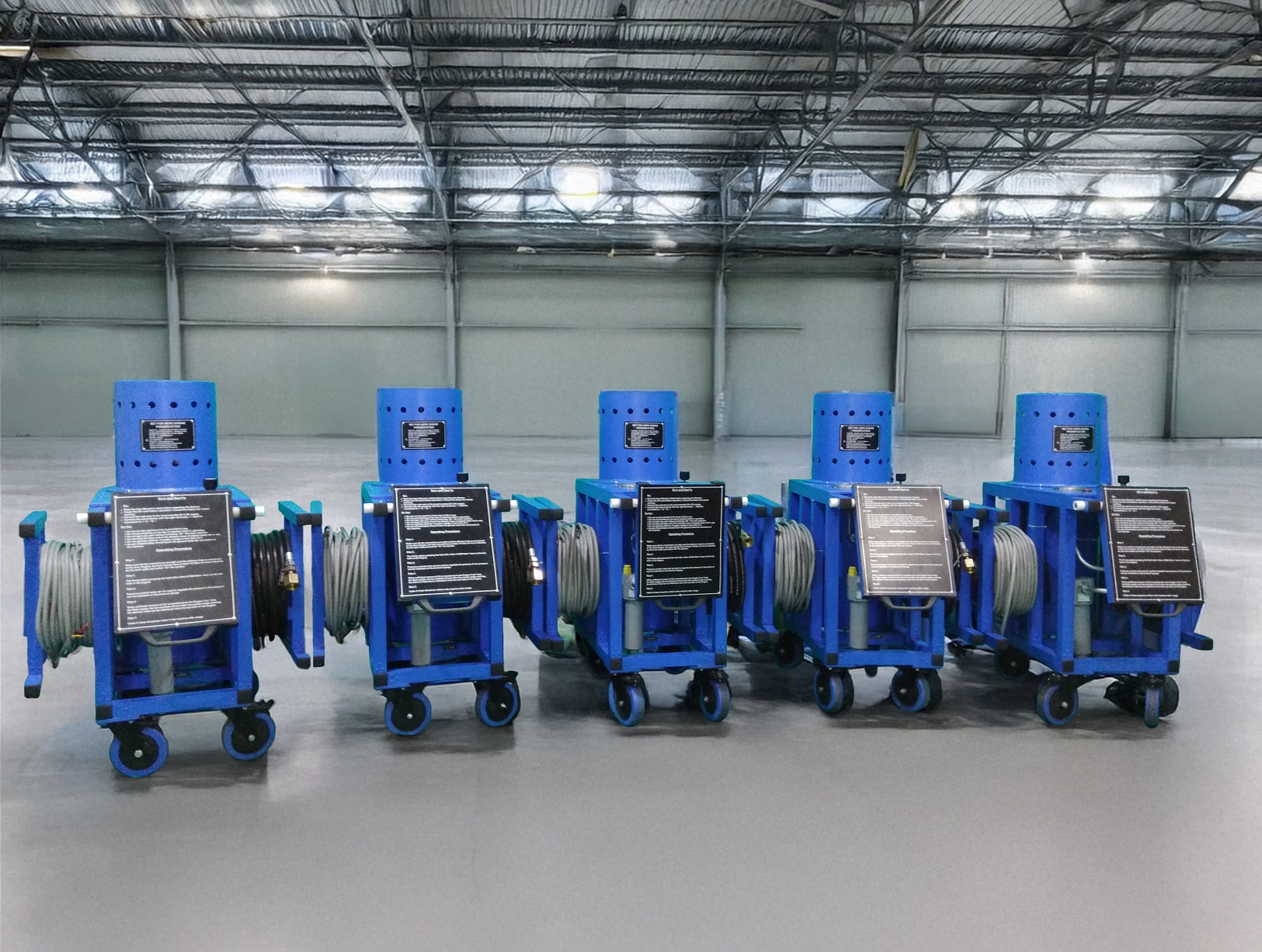

Aircraft engines removed from service — whether for overhaul, awaiting installation on a new airframe, held as spares inventory, or during extended aircraft grounding — face a serious risk that has nothing to do with flight: corrosion. Internal engine components, precision-machined to extremely tight tolerances, are vulnerable to moisture-driven corrosion that can render an otherwise serviceable engine unusable if it sits improperly protected for even a few months.
A proper aero engine preservation programme — supported by dedicated preservation equipment — protects engines during storage and transport by controlling internal humidity, applying corrosion-inhibiting compounds, and maintaining a sealed, monitored environment until the engine is ready to return to service.
Why Aircraft Engines Are Especially Vulnerable in Storage
Aircraft engines combine several factors that make them more susceptible to storage corrosion than many other types of stored mechanical equipment:
Tight tolerances: Turbine blades, bearing surfaces, and precision-machined internal components have extremely small clearances. Even minor corrosion pitting can alter clearances enough to compromise performance or require component replacement.
Multiple metal types in contact: Different alloys used throughout an engine create galvanic corrosion risk when moisture is present, accelerating corrosion compared to a single-material system.
Residual fluids: Lubricating oil, fuel residue, and hydraulic fluid remaining in the engine after removal from service can react with moisture and create localised corrosive conditions if not properly managed.
Complex internal geometry: Engines have numerous internal cavities, passages, and surfaces that are difficult to inspect visually and where moisture can accumulate undetected.
Core Elements of an Aero Engine Preservation Programme
Dehydration: Internal engine cavities are dried using desiccant materials or dry air purging to reduce moisture content below the threshold where corrosion-supporting humidity levels can develop.
Corrosion-inhibiting compound application: Specified corrosion preventive compounds (CPCs) are applied to internal surfaces — these form a protective film that displaces moisture and inhibits corrosion initiation on metal surfaces.
Sealing: Engine openings (intake, exhaust, accessory ports) are sealed with covers and plugs to prevent ambient moisture ingress and to allow internal atmosphere monitoring.
Desiccant monitoring: Indicating desiccant (which changes colour with humidity exposure) is placed inside the sealed engine and monitored periodically — a colour change signals that internal humidity has risen and re-preservation action is needed.
Periodic inspection and re-preservation: Preservation is not a one-time action for long-term storage — engines must be periodically inspected (checking desiccant indicators, seal integrity) and re-preserved if storage extends beyond the initial preservation cycle’s effective duration.
Preservation Levels and Storage Duration
Preservation procedures are typically tiered based on intended storage duration:
| Storage Duration | Typical Preservation Level |
|---|---|
| Short-term (days to weeks) | Basic sealing, minimal CPC application |
| Medium-term (weeks to months) | Full dehydration, CPC application, sealed with desiccant monitoring |
| Long-term (months to years) | Comprehensive dehydration, multiple CPC applications, periodic re-inspection cycle, possibly engine rotation/turning procedures |
Specific preservation levels, materials, and re-inspection intervals are defined by the engine OEM’s maintenance manual and applicable military or civil specifications, and must be followed precisely — improvised preservation procedures risk both ineffective corrosion protection and complications during eventual depreservation.
Depreservation — The Other Half of the Process
An engine coming out of storage must be depreserved correctly before return to service: removing seals and covers, removing or flushing out CPCs from internal surfaces (some CPCs are designed for removal, others for burn-off during initial engine runs, depending on specification), removing desiccant materials, and conducting required inspections before the engine is cleared for installation and operation. Depreservation procedures are as specification-driven as preservation procedures — using the wrong removal method for a given CPC type can leave residue that affects engine performance or fails inspection.
International References and Specifications
| Reference | Scope |
|---|---|
| MIL-E-38765 / related MIL specs | Military engine preservation, packaging, and storage |
| Engine OEM Maintenance Manuals | Aircraft and engine-specific preservation procedures (mandatory primary reference) |
| MIL-PRF-16173 | Corrosion preventive compounds — solvent cutback, cold-application |
| SAE AMS specifications | Corrosion preventive compound material specifications |
| ATA MSG-3 / Maintenance Review Board | Informs preservation as part of broader maintenance programme planning |
Applications
Engine Overhaul Facilities: Engines awaiting overhaul slot availability, or completed engines awaiting shipment/installation, require preservation during the holding period.
Spares Inventory Management: Airlines and military operators maintaining spare engine inventories must preserve these assets correctly to ensure they’re serviceable when needed, sometimes after years in storage.
Aircraft Storage and Grounding: When aircraft are grounded for extended periods (fleet groundings, storage pending sale, seasonal operations), engines may be preserved in place or removed and separately preserved depending on the situation and duration.
Military Logistics: Defence organisations maintaining engine reserves for fleet sustainment require robust, long-term preservation programmes supporting unpredictable storage durations.
Neometrix Aero Engine Preservation Equipment
Equipment and systems supporting aircraft engine preservation programmes — including dehydration, sealing, corrosion preventive compound application support, and desiccant monitoring — for short-term, medium-term, and long-term engine storage requirements.
FAQ
Q: Why are aircraft engines particularly vulnerable to corrosion during storage?
A: Aircraft engines combine extremely tight mechanical tolerances (where even minor corrosion pitting can compromise performance), multiple dissimilar metal alloys in contact (creating galvanic corrosion risk in the presence of moisture), residual operational fluids that can react with moisture, and complex internal geometry with cavities that are difficult to inspect and where moisture can accumulate undetected. This combination makes engines significantly more vulnerable to storage corrosion than many other types of mechanical equipment.
Q: What is a corrosion preventive compound and how is it used in engine preservation?
A: A corrosion preventive compound (CPC) is a specified chemical formulation applied to internal engine surfaces during preservation to form a protective film that displaces moisture and inhibits the electrochemical processes that drive corrosion. Different CPC types are specified for different applications and removal methods — some are designed to be flushed or wiped off during depreservation, while others are intended to burn off safely during the engine’s initial post-storage operation. The correct CPC type and application method is specified by the engine OEM and applicable specifications such as MIL-PRF-16173 or SAE AMS standards.
Q: How often must a preserved engine be re-inspected during long-term storage?
A: Re-inspection intervals depend on the specific preservation level applied and the engine OEM’s maintenance manual requirements, but generally engines in long-term storage require periodic inspection — checking desiccant colour indicators for humidity exposure and verifying seal integrity — at defined intervals throughout the storage period. If desiccant indicators show humidity exposure or seals show signs of failure, re-preservation action is required rather than waiting until the engine is needed for service.
Q: What is involved in depreserving an aircraft engine before it returns to service?
A: Depreservation involves removing all seals and protective covers, removing or appropriately addressing corrosion preventive compounds from internal surfaces (following the specific removal or burn-off procedure for the CPC type used), removing desiccant materials, and conducting all inspections specified by the engine OEM before the engine is cleared for installation and operational use. Depreservation must follow the exact procedure specified for the preservation method originally used — improvised removal methods can leave residue that affects engine performance or causes inspection failures.
Neometrix Defence Ltd. manufactures and supports aero engine preservation equipment for military and commercial aviation engine storage programmes. [email protected] | +91-7777-876-876