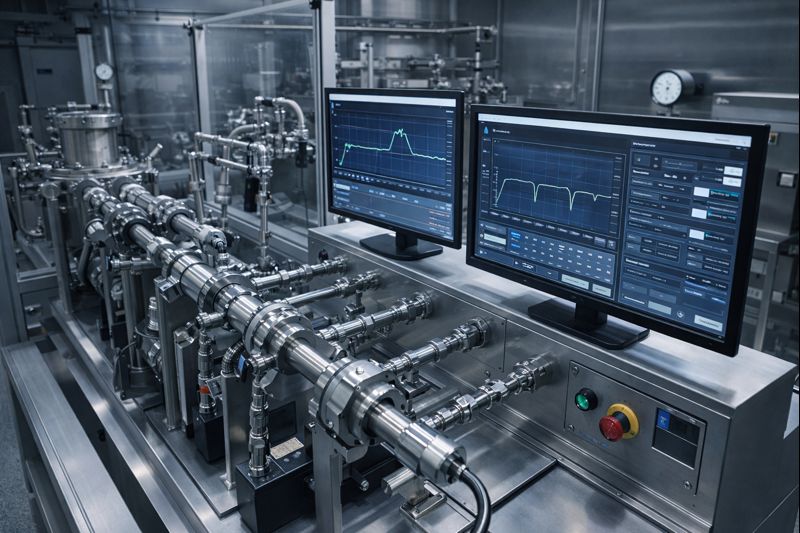
In industries where failure is not an option, understanding how a component behaves under repeated pressure loading is just as important as knowing its maximum pressure rating. This is where pressure cycle testing plays a decisive role.
Pressure cycling simulates real-world operating conditions by repeatedly applying and releasing pressure over thousands—or even millions—of cycles. Unlike static pressure tests, this method exposes fatigue, micro-cracks, seal degradation, and material weaknesses that only emerge over time.
What Is Pressure Cycle Testing?
Pressure cycle testing evaluates how components perform under continuous pressure fluctuations. Each cycle represents one complete pressurization and depressurization sequence, closely mimicking operational stress in real applications.
This form of testing is widely used for:
-
Hydraulic and pneumatic systems
-
Valves, pipes, hoses, and fittings
-
Aerospace and defense components
-
Automotive and rail braking systems
-
Oil, gas, and energy infrastructure
Why Static Tests Are Not Enough
A component may pass a static pressure test but still fail prematurely in the field. That’s because real systems rarely operate at a constant pressure.
Pressure cycle testing helps uncover:
-
Fatigue-related failures
-
Seal wear and leakage over time
-
Material deformation under cyclic stress
-
Manufacturing inconsistencies
-
Design weaknesses before mass production
By identifying these issues early, manufacturers can reduce warranty claims, improve safety, and extend product life.
Key Advantages of Automated Pressure Cycle Test Systems
Modern pressure cycle test systems are designed for accuracy, repeatability, and safety. Key benefits include:
-
Precise control of pressure range, ramp rates, and cycle counts
-
Automated data logging for traceability and compliance
-
High repeatability for consistent test results
-
Safe operation even at high pressures
-
Adaptability for different components and standards
Such systems are essential for meeting international testing standards and regulatory requirements.
Typical Applications Across Industries
Pressure cycle testing is a core requirement in many sectors:
-
Aerospace: Qualification of flight-critical hydraulic components
-
Automotive & Railways: Brake systems, fuel lines, and suspension components
-
Oil & Gas: Pipes, valves, and fittings exposed to fluctuating pressures
-
Manufacturing & R&D: Product validation and lifecycle testing
-
Defense: Reliability testing under extreme operating conditions
Enhancing Reliability Through Proper Test Infrastructure
Investing in a well-engineered pressure cycle test system ensures:
-
Higher product reliability
-
Reduced field failures
-
Improved customer confidence
-
Faster design validation cycles
For organizations focused on safety, compliance, and long-term performance, pressure cycle testing is not optional—it’s essential.
Related Product Reference
To support advanced pressure cycling requirements, explore this Pressure Cycle Test System designed for controlled, repeatable, and high-precision testing:
👉 https://neometrixgroup.com/products/pressure-cycle-test-system
Supplying Hydraulic Test Equipment to USA, UK, Europe & the Middle East: Neometrix hydraulic testing systems are deployed by testing facilities and defence contractors across the United States, United Kingdom, European Union, and the Middle East. Our systems comply with ASME, BS EN, PED (EU), and GCC regional standards. Contact our international team for pricing, delivery timelines, and on-site commissioning support.