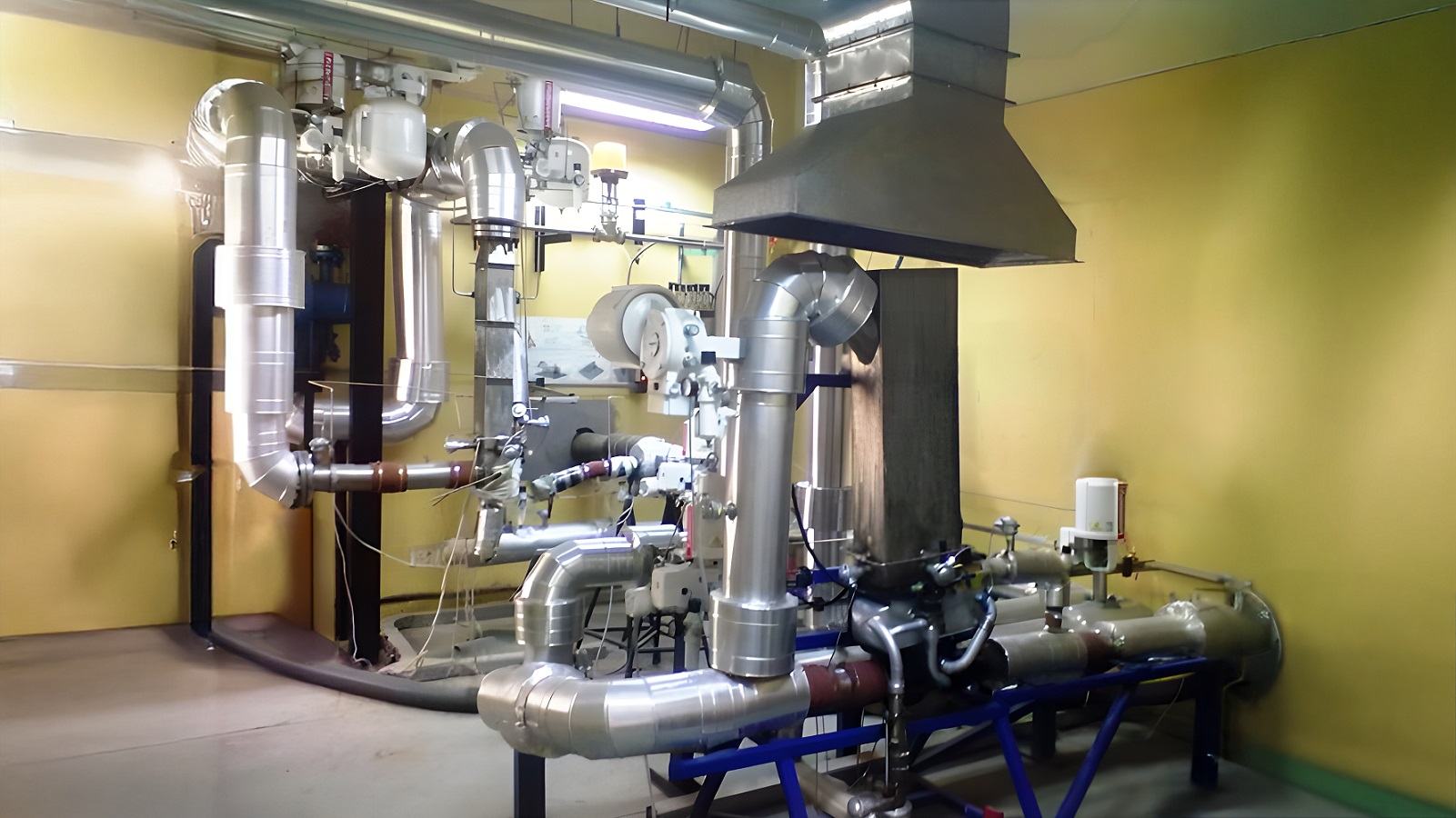

The Environmental Control System (ECS) is the subsystem that keeps aircraft crews and passengers alive — managing cabin pressure, temperature, and air quality at altitudes where the outside environment is lethal. In military aircraft, ECS also provides cockpit cooling for avionics, NBC (Nuclear, Biological, Chemical) protection, and oxygen enrichment for aircrew.
Before any ECS unit is installed in an aircraft, it must be tested on a dedicated ECS test bench — verifying that it meets its airflow, temperature, pressure, and humidity performance specifications across the full range of operating conditions it will encounter in service.
What an ECS Does — and Why Testing is Critical
An aircraft ECS takes high-pressure, high-temperature bleed air from the engines (typically 200–600°C, 3–5 bar) and conditions it to a breathable, comfortable cabin environment — typically 18–24°C at 0.75–0.8 bar (equivalent to 6,000–8,000 ft altitude) in commercial aircraft, and suit temperature and NBC-protected air in military applications.
The ECS components that require testing include:
- Air cycle machines (ACM) — turbine/compressor units that cool bleed air
- Heat exchangers — primary and secondary ram air heat exchangers
- Water separators — remove moisture condensed during cooling
- Temperature control valves — mix hot and cold air streams
- Cabin pressure controllers — regulate outflow valve position
- NBC filters and overpressure units — military-specific ECS components
What an ECS Test Bench Measures
Bleed air simulation: The test bench supplies high-pressure, high-temperature air (or nitrogen) to the ECS inlet, replicating engine bleed air conditions at various power settings and altitudes. Temperature and pressure are independently controlled and measured.
Cooling performance: Air temperature at ECS outlet vs inlet conditions across the operating envelope. The ECS must deliver conditioned air within specification at all combinations of bleed air temperature, altitude, and heat load.
Airflow rates: Mass flow and volumetric flow at inlet and outlet — verifying the ECS delivers adequate fresh air per occupant per minute to cabin specification.
Humidity control: Moisture content at outlet — verifying the water separator removes condensation effectively.
Pressure regulation: Cabin differential pressure control accuracy at simulated altitude conditions.
DAQ integration: All parameters — temperature, pressure, flow, humidity — logged continuously via data acquisition system for analysis and compliance reporting.
International Standards
| Standard | Region | Application |
|---|---|---|
| MIL-E-18927 | USA | Military aircraft environmental control systems |
| MIL-PRF-87162 | USA | Air cycle machines for aircraft ECS |
| DO-160 Section 4 | USA/International | Temperature and altitude environmental testing |
| DEF STAN 00-970 | UK | UK MoD airworthiness — ECS requirements |
| CS-25 Subpart F | Europe/International | EASA large aircraft cabin environmental requirements |
| AS8040 | USA/International | ECS unit minimum performance standards |
| NATO STANAG 4800 | NATO | NBC protection systems for military vehicles |
Industries and Applications
Military aircraft MRO: ECS units from fighter aircraft, transport aircraft, and helicopters are overhauled and tested on ECS test benches at military maintenance facilities. US Air Force, UK RAF, Indian Air Force, and NATO air forces all operate ECS test facilities.
Commercial aircraft MRO: ECS pack testing is a standard part of heavy maintenance for commercial aircraft. Airbus A320/A330, Boeing 737/777, and other types have ECS packs overhauled and bench-tested at regular intervals.
Defence ground vehicles: Armoured personnel carriers, command vehicles, and special operations vehicles with pressurised, NBC-protected ECS require bench testing after maintenance.
Naval vessels: Submarine atmosphere control systems and naval vessel HVAC systems incorporate ECS technology requiring dedicated test facilities.
Neometrix ECS Test Bench — Model A0624
The Neometrix ECS Test Bench Model A0624 tests military and civilian ECS units with:
- High-pressure airflow simulation replicating engine bleed air conditions
- Independent temperature and humidity control at test inlet
- Integrated DAQ system for real-time monitoring of all parameters
- Automated test sequences for MIL-E-18927, DO-160, and DEF STAN 00-970 compliance
- Suitable for air cycle machines, heat exchangers, control valves, and complete ECS packs
→ View Full Specifications
→ Request a Quote
FAQ
Q: What is an Environmental Control System (ECS) in an aircraft?
A: An aircraft ECS is the subsystem that conditions bleed air from the engines into breathable, comfortable cabin air. It controls cabin temperature, pressure, humidity, and air quality. In military aircraft it additionally provides NBC protection, avionics cooling, and oxygen enrichment. The ECS is safety-critical — its failure can incapacitate crew within minutes at altitude.
Q: What standard applies to military aircraft ECS testing?
A: MIL-E-18927 is the primary US military specification for aircraft environmental control systems. It specifies performance requirements, qualification test procedures, and acceptance test requirements. UK MoD requirements are covered by DEF STAN 00-970. NATO interoperability requirements reference STANAG 4800 for NBC protection systems.
Q: What is bleed air and why is it simulated on an ECS test bench?
A: Bleed air is high-pressure, high-temperature air extracted from the aircraft engine compressor stages. It is the energy source for the ECS cooling cycle. An ECS test bench must simulate bleed air conditions — typically 200–600°C and 3–5 bar — to test the ECS under realistic operating conditions. Without accurate bleed air simulation, ECS performance cannot be verified.
Q: Why is ECS testing required after MRO?
A: ECS performance degrades with use — bearing wear in air cycle machines, fouling of heat exchangers, deterioration of seals in control valves. After overhaul, bench testing verifies that restored performance meets specification before the ECS is reinstalled in an aircraft. Aviation regulatory authorities (FAA, EASA, DGCA) require performance documentation from bench testing as part of approved maintenance procedures.
Neometrix Defence Ltd. manufactures ECS test benches for military and civilian aerospace applications. [email protected] | +91-7777-876-876