
Introduction
Hydraulic dampers are critical safety components in rail coaches, locomotives, metro systems, and heavy-duty vehicles. Their primary function is vibration control — ensuring ride stability, passenger comfort, and structural protection.
However, the real challenge is not manufacturing a damper — it is validating its performance under real-world operating conditions.
This is where advanced hydraulic damper testing systems play a crucial role.
Why Hydraulic Damper Testing Matters
In high-speed rail and heavy mobility applications, dampers experience:
-
Continuous cyclic loading
-
Variable stroke speeds
-
Sudden impact loads
-
High-pressure internal fluid dynamics
-
Temperature fluctuations
If not properly validated, damper failure can lead to:
-
Excessive vibration
-
Reduced ride comfort
-
Track instability
-
Increased wear on suspension components
-
Safety risks in extreme scenarios
A structured testing methodology ensures every damper meets design, safety, and endurance specifications before deployment.
Core Parameters Evaluated in Damper Testing
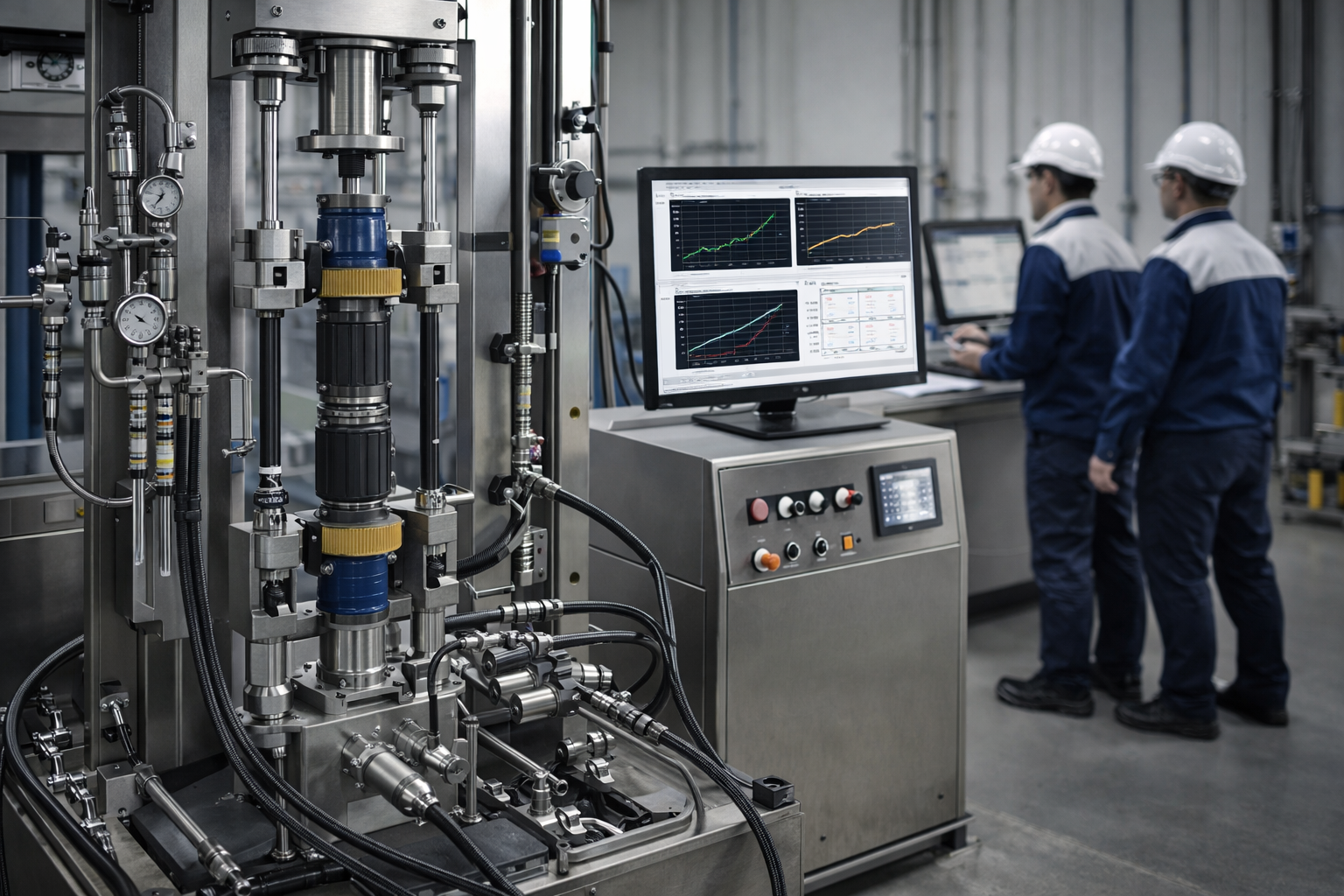
A modern hydraulic damper test bench evaluates multiple performance factors:
1️⃣ Force–Velocity Characteristics
Measures compression and rebound force behavior across varying stroke speeds.
2️⃣ Dynamic Response
Simulates real operating conditions to analyze damping efficiency.
3️⃣ Leakage & Seal Integrity
Ensures hydraulic fluid containment under pressure.
4️⃣ Endurance & Fatigue Testing
Validates long-term durability through cyclic testing.
5️⃣ Data Logging & Curve Analysis
Generates graphical force vs. displacement and force vs. velocity curves for engineering validation.
Role of Automation & Servo-Hydraulic Control
Modern test benches use:
-
Servo-hydraulic actuators
-
Closed-loop control systems
-
High-precision load cells
-
Real-time data acquisition software
These systems provide repeatable, programmable test cycles with high measurement accuracy.
An example of such an advanced system can be explored here:
👉 https://neometrixgroup.com/products/hydraulic-damper-test-bench-manufacturer
This illustrates how automated control architecture enhances testing reliability and reduces manual intervention.
Industries That Depend on Damper Validation
Hydraulic damper testing is critical in:
-
🚆 Railways & Metro Coaches
-
🚄 High-Speed Rail Projects
-
🛡 Defense Mobility Systems
-
🚛 Heavy Commercial Vehicles
-
🏗 Industrial Suspension Systems
As transportation systems move toward higher speeds and heavier payload capacities, validation standards become increasingly stringent.
Engineering Benefits of a Dedicated Damper Test Bench
✔ Improved product reliability
✔ Reduced field failures
✔ Standard compliance validation
✔ Faster R&D cycles
✔ Enhanced quality assurance
✔ Predictive maintenance data generation
Testing is no longer just inspection — it is a strategic quality control process.
The Future of Damper Testing
The next generation of hydraulic damper testing systems is moving toward:
-
AI-driven performance analysis
-
Cloud-based data storage
-
Predictive failure modeling
-
Automated compliance reporting
-
Integrated Industry 4.0 compatibility
Advanced testing platforms are becoming intelligent diagnostic systems rather than simple validation equipment.
Conclusion
Hydraulic dampers are small components with massive responsibility. Their performance directly impacts safety, stability, and lifecycle costs in rail and heavy mobility applications.
A robust hydraulic damper test bench ensures that every unit leaving the production floor is performance-verified and standards-compliant.
To understand how modern automated systems are designed for this purpose, you can explore:
https://neometrixgroup.com/products/hydraulic-damper-test-bench-manufacturer
Engineering excellence begins with precise validation.
Defence Testing Solutions for USA, UK, Europe & the Middle East: Neometrix defence testing systems are trusted by armed forces and procurement agencies across the United States, United Kingdom, Europe, and Middle East including UAE and Saudi Arabia. Our equipment meets MIL-STD, STANAG, and AQAP defence quality specifications. Neometrix is DRDO-approved and ISO 9001 certified for defence exports to allied nations.