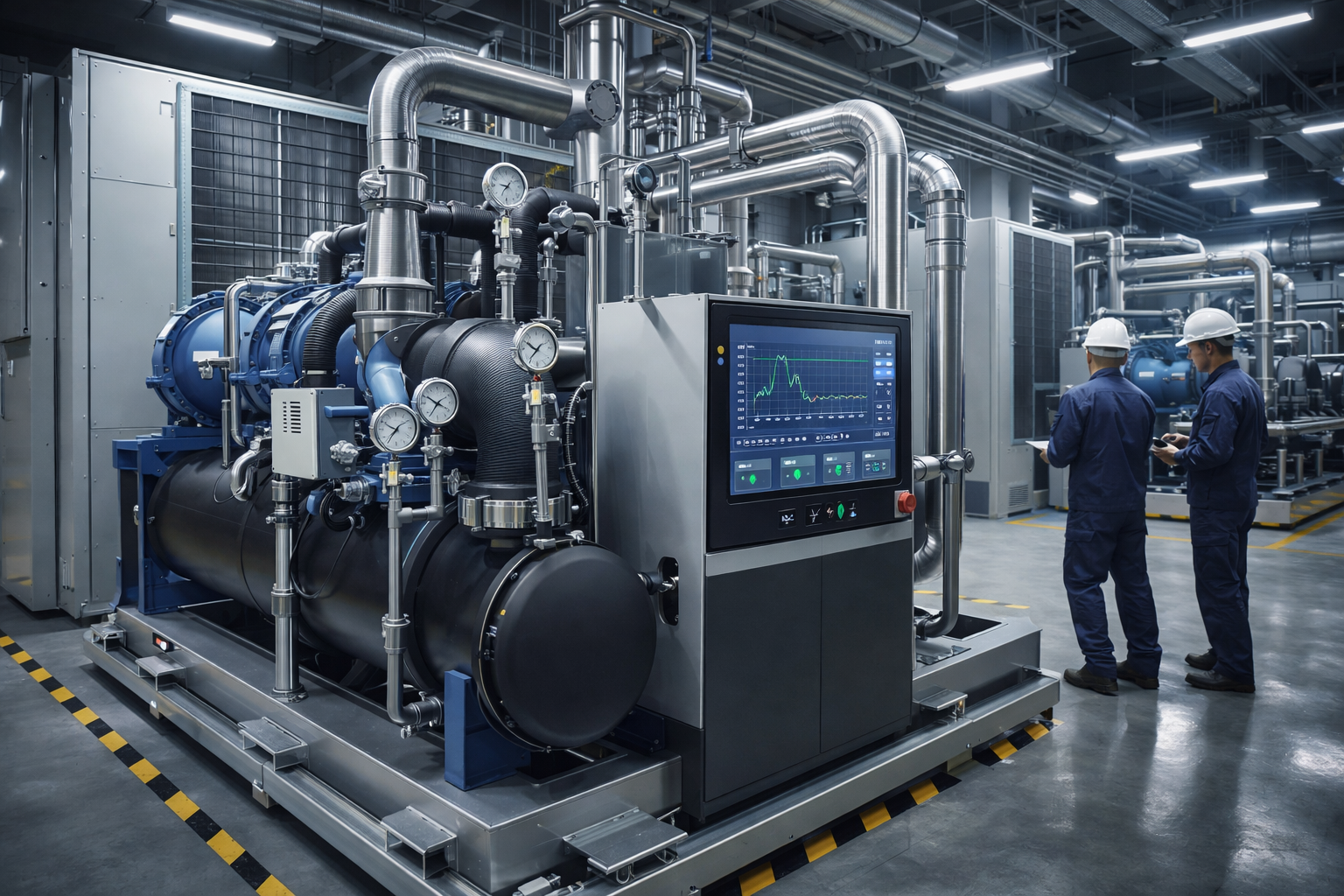

Introduction
In modern industrial environments, temperature control is not a luxury — it is a necessity. From manufacturing processes to chemical storage, pharmaceutical production, food preservation, and testing laboratories, refrigeration systems play a critical role in maintaining operational integrity and product quality.
Industrial refrigeration systems are engineered not just for cooling — but for precision, reliability, and efficiency under demanding conditions.
For detailed technical configurations and system capabilities, explore:
👉 https://neometrixgroup.com/products/refrigeration-system
❄️ What Is an Industrial Refrigeration System?
An industrial refrigeration system is a high-capacity thermal control solution designed to remove heat from processes, materials, or environments using controlled thermodynamic cycles.
Unlike domestic cooling units, industrial systems are built for:
-
Continuous operation
-
Heavy thermal loads
-
Precise temperature regulation
-
Energy efficiency
-
Safety compliance
They are widely used in sectors such as:
-
Aerospace testing
-
Automotive component validation
-
Chemical processing
-
Cold storage facilities
-
Pharmaceutical manufacturing
-
Oil & gas operations
🔧 Core Components of an Industrial Refrigeration System
A typical high-performance refrigeration setup includes:
1️⃣ Compressor
The heart of the system — increases refrigerant pressure and drives circulation.
2️⃣ Condenser
Dissipates heat absorbed from the process into the surrounding environment.
3️⃣ Expansion Valve
Regulates refrigerant flow and controls pressure drop.
4️⃣ Evaporator
Absorbs heat from the process fluid or environment.
5️⃣ Control & Monitoring System
PLC or microprocessor-based systems ensure:
-
Real-time temperature monitoring
-
Safety interlocks
-
Data logging
-
Automated protection
For industrial-grade refrigeration solutions designed for performance-critical environments, refer to:
👉 https://neometrixgroup.com/products/refrigeration-system
⚙️ Why Precision Refrigeration Matters in Industrial Applications
✔ Process Stability
Temperature fluctuations can affect material properties, chemical reactions, and mechanical performance.
✔ Equipment Protection
Overheating reduces component life and increases maintenance cost.
✔ Safety Assurance
Controlled cooling prevents hazardous thermal buildup in high-pressure systems.
✔ Energy Optimization
Advanced refrigeration systems are designed for minimal power consumption with maximum output.
🏭 Applications in Testing & Engineering Environments
In high-performance engineering sectors, refrigeration systems are often integrated with:
-
Hydraulic test rigs
-
Pressure cycling systems
-
Environmental simulation chambers
-
Aerospace actuator testing setups
-
Automotive durability test benches
These systems ensure components are tested under realistic thermal stress conditions.
🌍 Key Advantages of Modern Industrial Refrigeration Systems
-
High cooling capacity
-
Customizable temperature ranges
-
Rugged industrial construction
-
Automated control systems
-
Low operational noise
-
Scalable configurations
-
Long service life
Advanced systems are also designed with environmental considerations such as optimized refrigerant selection and energy efficiency compliance.
🚀 The Future of Industrial Cooling
With increasing demand for:
-
Sustainable energy usage
-
Smart automation
-
Industry 4.0 integration
-
Remote diagnostics
-
Predictive maintenance
Modern refrigeration systems are becoming intelligent thermal management platforms rather than standalone cooling units.
Industrial growth depends heavily on reliable temperature control — and refrigeration systems form the silent backbone of countless mission-critical operations.
To explore industrial-grade refrigeration solutions engineered for performance-driven applications, visit:
👉 https://neometrixgroup.com/products/refrigeration-system
Neometrix Engineering Solutions — USA, UK, Europe & Middle East: Neometrix exports precision test equipment and engineering systems to customers across the United States, United Kingdom, European Union, and the Middle East. Our products comply with ISO 9001, ASME, CE, and MIL quality standards. Contact our international sales team for pricing, delivery, and commissioning support.