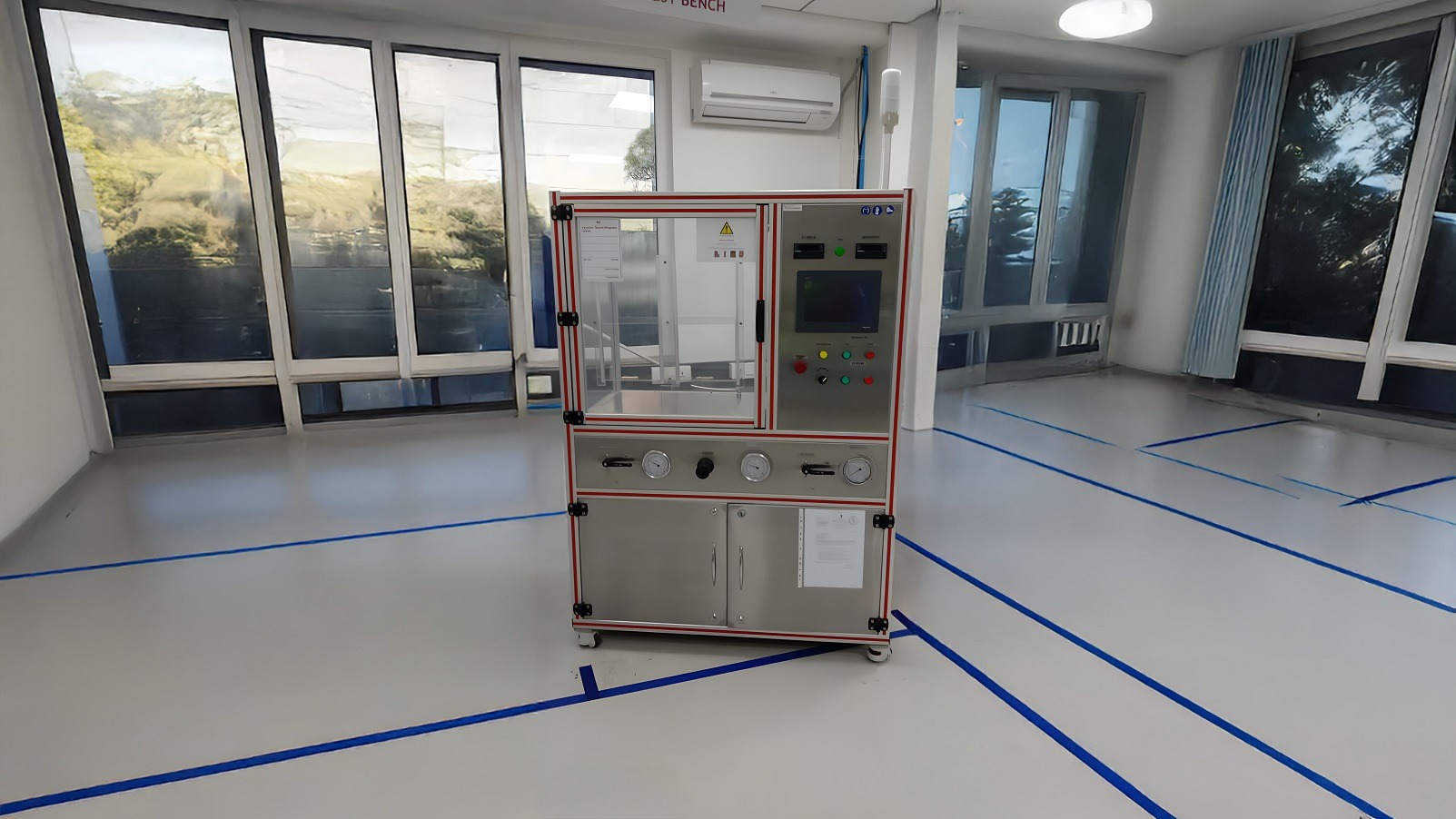

From a compact automotive solenoid valve to a large pneumatic actuator on a railway braking system, every pressurised pneumatic component in production must be verified leak-tight before it leaves the factory. A high pressure leak testing machine is a fully automated pneumatic test system that applies controlled pressure and measures leak rate with the speed and repeatability that production environments demand.
Unlike single-purpose leak detectors, a versatile high pressure leak testing machine supports multiple test protocols — static leak, pressure hold, stepwise pressure, and real-time pressure-vs-time profiling — making one machine adaptable across an entire product range from small solenoid valves to large pneumatic actuators.
Core Test Modes
Static Leak Testing (Pressure Decay Method): The operator defines target test pressure, hold time, and maximum allowable pressure drop. The component is pressurised, isolated, and pressure is monitored over the hold period. This is the workhorse test mode for production leak verification across most pneumatic components.
Pressure Hold Testing: Similar to static leak testing but typically used to verify the component maintains pressure within a tolerance band over an extended period — useful for components where slow pressure decay over hours matters more than an instantaneous leak rate number.
Stepwise Pressure Testing: The component is pressurised in defined steps (e.g., 25%, 50%, 75%, 100% of rated pressure), with leak or functional checks performed at each step. This identifies pressure-dependent failure modes that might not appear at a single test pressure — useful for components like solenoid valves where seal performance can vary nonlinearly with pressure.
Real-Time Pressure vs. Time Profiling: Continuous pressure monitoring throughout a custom test sequence, useful for characterising component behaviour during dynamic events (rapid pressurisation, sudden venting) rather than just steady-state leak rate.
Equipment Architecture
Air-driven booster: Generates the high test pressure (up to 250 bar) from a standard shop air or nitrogen supply, eliminating the need for separate high-pressure gas cylinders for routine production testing.
Dome-loaded pressure regulation: Provides stable, repeatable pressure control without the hunting and overshoot common with simpler regulator types — important for consistent test results across thousands of production units.
10″ touchscreen HMI with PLC automation: Operators select test programmes, enter component-specific parameters, and the system executes the complete test sequence automatically, logging results for each unit.
Premium instrumentation: Components from established instrumentation brands (WIKA pressure gauges/transducers, Haskel pumps, Festo and Norgren pneumatic valves) ensure measurement accuracy and long-term reliability in high-frequency industrial use.
Operational Envelope
| Parameter | Specification |
|---|---|
| Test pressure | Up to 250 bar |
| Component volume range | 1.2 litres to 20 litres |
| Test modes | Static leak, pressure hold, stepwise pressure, real-time profiling |
| Control | PLC-based, 10″ touchscreen HMI |
Applications by Industry
Automotive: Solenoid valves, pneumatic actuators, and pressure-sensitive components in production quality control and endurance testing programmes.
Aerospace: Pneumatic components requiring leak-tight verification before installation, where leak rate directly affects system performance and safety margins.
Railways: Pneumatic braking system components — valves, actuators, reservoirs — that must maintain leak-tight integrity across the operational life of rolling stock.
Defence: Pneumatic components in vehicle, weapon system, and ground support equipment requiring documented leak-test compliance for procurement and quality assurance.
Industrial Automation: General pneumatic component manufacturers requiring in-line quality inspection, batch testing, and endurance/destructive testing as part of production quality systems.
Neometrix High Pressure Leak Testing Machine
A fully automated pneumatic test system for precise leak detection in components ranging from 1.2 to 20 litres in volume, operating at pressures up to 250 bar. Features an air-driven booster, dome-loaded pressure regulation, 10″ touchscreen HMI with PLC-based automation, and support for multiple test modes including static leak, pressure hold, stepwise pressure, and real-time pressure-vs-time profiling.
→ View Full Specifications
→ Request a Quote
FAQ
Q: What is the difference between static leak testing and stepwise pressure testing?
A: Static leak testing pressurises the component to a single target pressure and monitors pressure decay over a hold period — it’s the standard method for verifying leak-tightness at the component’s rated operating pressure. Stepwise pressure testing pressurises in defined increments (e.g., 25%, 50%, 75%, 100% of rated pressure) with checks at each step, revealing pressure-dependent failure modes — such as seal performance that degrades nonlinearly as pressure increases — that a single-pressure static test might miss.
Q: What component sizes can a high pressure leak testing machine handle?
A: Typical machines in this category are designed for components ranging from approximately 1.2 to 20 litres in internal volume, covering everything from compact solenoid valves up to large pneumatic actuators. Flexible mounting and connection options allow the same machine to be reconfigured for different component types within this range.
Q: Why use an air-driven booster rather than a high-pressure gas cylinder for leak testing?
A: An air-driven booster generates test pressure on demand from a standard shop air or nitrogen supply, eliminating the logistics, storage, and replacement costs of dedicated high-pressure gas cylinders for routine production testing. It also allows the test pressure to be set precisely and repeatably via the control system, rather than depending on cylinder regulator settings.
Q: What is dome-loaded pressure regulation and why does it matter for leak testing accuracy?
A: Dome-loaded regulators use a pilot pressure signal acting on a diaphragm to control the main regulating valve, providing more stable and precise pressure control than simple spring-loaded regulators — particularly important at the lower flow rates typical during a leak-test hold phase, where simpler regulators can hunt or oscillate. Stable pressure during the hold phase is essential for an accurate leak rate measurement.
Neometrix Defence Ltd. manufactures high pressure leak testing machines for automotive, aerospace, railway, and defence pneumatic component testing. [email protected] | +91-7777-876-876