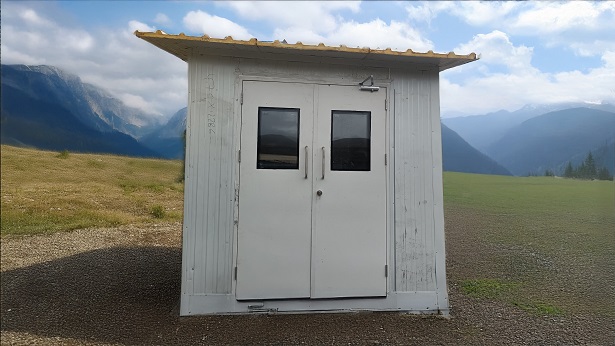

At 5,000 metres above sea level — the altitude of many Himalayan military posts, research stations, and high-altitude infrastructure projects — barometric pressure is approximately half that at sea level. The partial pressure of oxygen drops proportionally. The air contains the same 21% oxygen it does at sea level, but each breath delivers roughly half the oxygen molecules. The physiological consequence is hypobaric hypoxia: impaired cognition, reduced physical performance, acute mountain sickness, and in severe or prolonged exposure, life-threatening complications.
An Oxygen Enrichment Facility (OEF) addresses this by raising indoor oxygen concentration from 21% to 27–30% using PSA (Pressure Swing Adsorption) technology — effectively reducing the equivalent altitude experienced by occupants from 5,000m to approximately 2,500–3,000m, restoring near-normal physiological function for personnel who must live and work at extreme altitude.
The Physiology of High-Altitude Hypoxia
The human body requires adequate oxygen partial pressure to maintain haemoglobin saturation. At sea level (1013 mbar), 21% oxygen gives a partial pressure of approximately 213 mbar — sufficient for normal oxygenation. At 5,000m (540 mbar), the same 21% oxygen gives only approximately 113 mbar — well below the threshold for sustained normal function.
The effects are progressive and can be severe: initially impaired reaction time, judgement, and fine motor control; progressing to headache, nausea, and sleep disruption at moderate hypoxia; and in unacclimatised individuals, to potentially fatal High Altitude Pulmonary Edema (HAPE) or High Altitude Cerebral Edema (HACE).
Raising indoor oxygen concentration to 27–30% at 5,000m restores the oxygen partial pressure experienced by occupants to approximately 145–162 mbar — comparable to conditions at 2,500–3,000m, where most personnel can function effectively without acclimatisation.
How PSA Oxygen Generation Works
Unlike nitrogen generation (which uses zeolite to adsorb oxygen and let nitrogen through), PSA oxygen generation uses lithium-exchanged zeolite that selectively adsorbs nitrogen, allowing oxygen to pass through.
Dual-column PSA cycle:
- Column A adsorbs nitrogen (at elevated pressure), producing oxygen-enriched output
- Column B regenerates (at low pressure), desorbing nitrogen to vent
- Columns alternate continuously — one always adsorbing while the other regenerates
- Output purity is determined by cycle timing, pressure, and zeolite characteristics
This produces oxygen-enriched air (not pure oxygen) — a safer and more practical output for room enrichment than medical-grade pure oxygen, which would create fire and explosion hazards.
System Architecture and Key Features
PSA oxygen generator: Available in 80, 130, and 230 LPM configurations to suit different room sizes and occupancy levels. Matched to the volume and occupancy of the space being enriched.
Pressure-controlled distribution network: Oxygen-enriched air is distributed through calibrated nozzles or diffusers positioned to achieve uniform concentration throughout the habitable space — avoiding dead zones and concentration hotspots.
Real-time O2 and CO2 monitoring: Electrochemical or paramagnetic oxygen sensors continuously monitor room O2 concentration with automatic feedback control. CO2 monitors ensure adequate ventilation alongside oxygen enrichment.
Smart PLC automation: Siemens or equivalent PLC manages the PSA cycle, monitors all sensors, controls distribution valves, and provides alarm and shutdown logic.
SCADA integration: Remote monitoring and data logging allow facility operators at lower altitude to monitor high-altitude station environmental conditions continuously.
Nasal cannula ports: For individuals requiring supplemental oxygen beyond room enrichment levels — particularly during acclimatisation periods or medical situations.
CO2 exhaust systems: Dedicated exhaust ensures CO2 from occupant respiration is removed, preventing CO2 accumulation that would add to physiological impairment.
Diesel or solar-hybrid backup: At remote high-altitude locations, grid power is often unavailable or unreliable. Backup power options ensure continuous oxygen enrichment regardless of grid status.
Sub-zero operability: Designed for the extreme temperature range of high-altitude mountain environments (-20°C or below), with insulated pipework, freeze-protected sensors, and cold-start capability.
Applications
Military high-altitude posts: Indian Army, ITBP, and other military and paramilitary personnel stationed at high-altitude positions along India’s northern borders require sustained cognitive and physical performance. OEFs are deployed in accommodation, operations rooms, and medical facilities at these locations.
Research stations: Scientific research at high altitude — atmospheric monitoring, glaciology, ecology — requires personnel who can work productively for extended periods. OEFs provide a controlled indoor environment for rest and recovery.
Medical facilities: High-altitude district hospitals and health centres treating both altitude sickness patients and local population require reliable oxygen enrichment for patient care areas.
Acclimatisation shelters: For mountain expeditions and high-altitude construction projects, OEFs in base camps and acclimatisation shelters reduce the time and risk associated with altitude acclimatisation.
Key Specifications
| Configuration | Flow (LPM) | Room Volume | Occupancy |
|---|---|---|---|
| Standard small | 80 | Up to ~40 m³ | 4–6 persons |
| Standard medium | 130 | Up to ~65 m³ | 8–10 persons |
| Standard large | 230 | Up to ~115 m³ | 12–18 persons |
International References
| Standard/Body | Relevance |
|---|---|
| ICAO Annex 6 | Supplemental oxygen requirements for aviation (reference for partial pressure limits) |
| WHO guidelines | Altitude illness prevention and treatment |
| EN 14467 | Medical oxygen — relevant for purity reference |
| NFPA 99 | Healthcare facilities — oxygen-enriched atmospheres |
Neometrix Oxygen Enrichment Facility
A fully integrated, modular PSA oxygen enrichment system designed for extreme altitude deployment at 5,000m. Raises indoor O2 from 21% to 27–30%. Available in 80, 130, and 230 LPM configurations. Smart PLC automation, real-time O2 and CO2 monitoring, SCADA integration, nasal cannula ports, CO2 exhaust, and optional diesel/solar-hybrid backup. Sub-zero operable for Himalayan deployment.
→ View Full Specifications
→ Request a Quote
FAQ
Q: What oxygen concentration does an enrichment facility target and why 27–30%?
A: The target of 27–30% oxygen raises the oxygen partial pressure at 5,000m from approximately 113 mbar (equivalent to severe hypoxia) to approximately 145–162 mbar — comparable to conditions at 2,500–3,000m altitude. This range is chosen because it provides meaningful physiological benefit (restoring near-normal cognitive and physical function) without creating the fire hazard risks associated with much higher concentrations. Above approximately 30%, ignition risks of common materials increase significantly; below 24–25%, benefit at extreme altitude is limited. The 27–30% range provides optimal benefit within a safe operational window.
Q: What is the difference between oxygen enrichment and supplemental oxygen from cylinders?
A: Supplemental oxygen from cylinders or concentrators delivers a stream of high-concentration oxygen (typically 90–95%) to individual users via mask or cannula — suitable for medical treatment or individual physical exertion but impractical for sustained habitation of an entire room. Oxygen enrichment raises the ambient oxygen concentration of an entire enclosed space to a moderate elevated level, allowing all occupants to breathe normally without any equipment. For a military post or research station where personnel spend extended periods, room enrichment provides continuous benefit without the logistics of individual supplemental oxygen delivery.
Q: Can an OEF operate in sub-zero temperatures typical of Himalayan deployments?
A: Yes — the Neometrix OEF is specifically designed for sub-zero operational environments. This requires insulated pipework to prevent condensation and freezing of moisture in the distribution system, freeze-protected sensors and instrumentation, cold-start procedures for the PSA columns and compressor, and enclosures rated for the temperature range experienced (-20°C or below in many Himalayan locations). Standard PSA systems designed for lower-altitude industrial applications are not suitable for high-altitude cold deployment without these modifications.
Q: How does the CO2 monitoring and exhaust system work alongside oxygen enrichment?
A: Oxygen enrichment in an enclosed space that is not adequately ventilated can allow CO2 from occupant respiration to accumulate — exacerbating physiological impairment separately from the hypoxia being addressed. The OEF includes CO2 concentration monitoring with alarm thresholds, and a dedicated CO2 exhaust system ensures continuous removal of exhaled CO2 alongside the oxygen enrichment supply. The control system balances oxygen input, CO2 removal, and room pressure to maintain both adequate O2 and safe CO2 levels simultaneously.
Neometrix Defence Ltd. designs and manufactures oxygen enrichment facilities for high-altitude military, medical, and research deployments. [email protected] | +91-7777-876-876