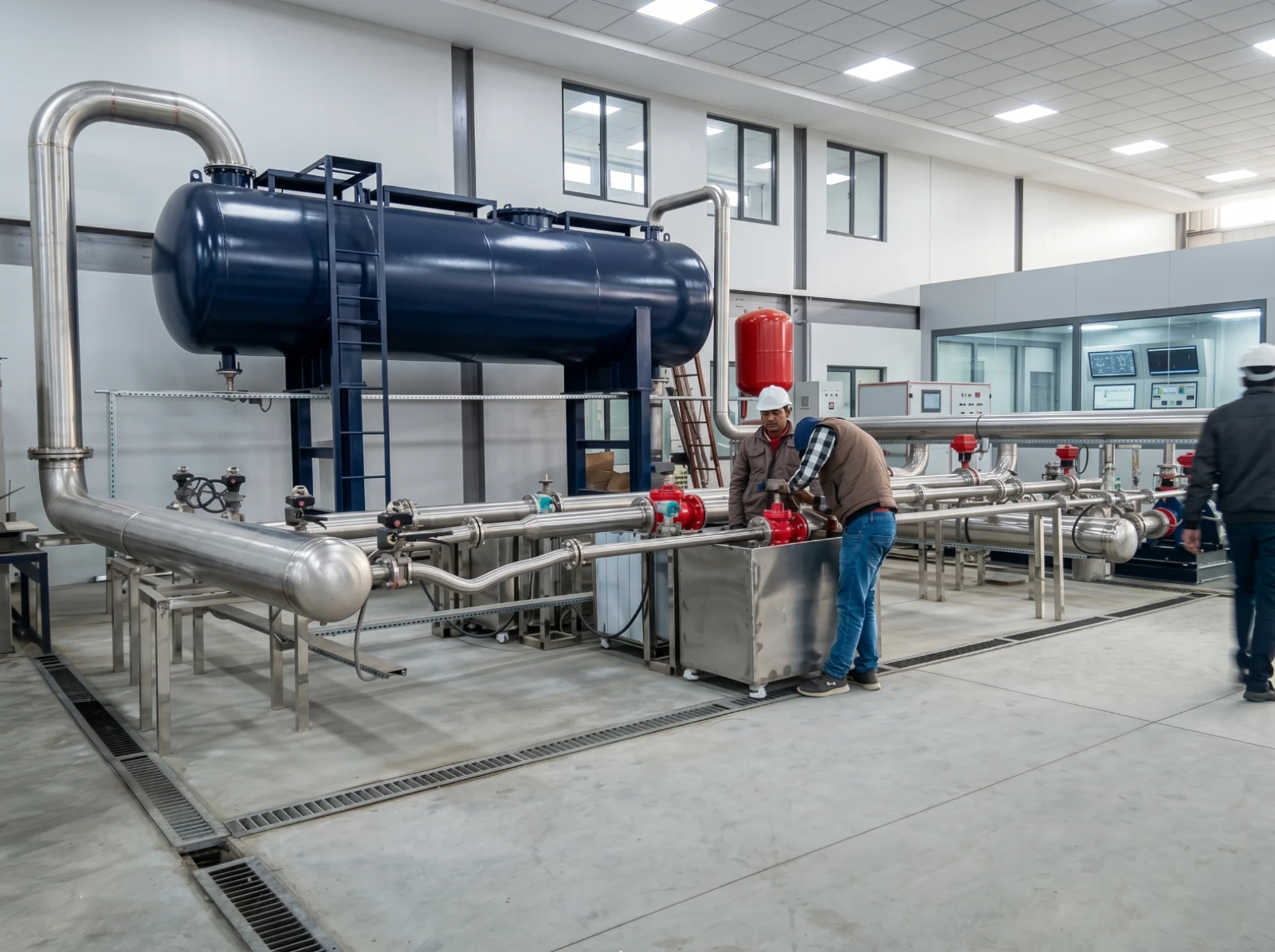

Control valves regulate flow in industrial pipelines, process plants, aircraft fuel systems, and defence hydraulic circuits. Before any control valve enters service — whether it’s controlling steam in a power plant, fuel in an aircraft engine, or coolant in a defence vehicle — it must be tested to verify its flow coefficient (Cv or Kv), pressure drop characteristics, and leakage performance under rated conditions.
A CV and control valve test rig is the precision instrument that performs this verification — measuring exactly how much fluid passes through a valve at a given pressure differential, across the full range of valve positions from fully closed to fully open.
What is a Flow Coefficient (Cv/Kv)?
The flow coefficient is the single most important performance parameter of any control valve. It quantifies how much fluid the valve passes under standardised conditions.
Cv (US customary): The number of US gallons per minute of water at 60°F that flows through the valve with a 1 psi pressure drop. Defined by ISA 75.01 and ANSI/FCI 70-2.
Kv (SI/metric): The number of cubic metres per hour of water at 5–40°C that flows through the valve with a 1 bar pressure drop. Defined by IEC 60534-1.
Conversion: Kv = 0.865 × Cv
The Cv/Kv value at full open determines the valve’s maximum flow capacity. The Cv/Kv curve across valve travel determines the valve’s control characteristic — equal percentage, linear, or quick-opening.
Why Control Valve Testing Matters
Process industries: A control valve with incorrect Cv installed in a process loop causes poor process control — either starving the process of flow or flooding it. In oil and gas, chemical, and power generation applications, this directly impacts production efficiency and safety.
Aerospace and defence: Fuel control valves, hydraulic selector valves, and environmental control system valves in aircraft and defence systems must meet strict Cv specifications. A valve that flows 10% more than specified can destabilise a fuel control loop; one that flows 10% less may starve an actuator.
Procurement and certification: International standards (ISA, IEC, ANSI) require that control valve manufacturers provide certified Cv/Kv data with every valve shipment. This data must come from a calibrated, traceable test rig.
What a CV Test Rig Measures
Flow coefficient (Cv/Kv): At each valve position, the test rig measures flow rate and pressure differential simultaneously. Cv = Q × √(SG/ΔP) where Q is flow rate, SG is specific gravity, and ΔP is pressure drop.
Pressure drop vs flow: The full ΔP-Q curve across the valve’s operating range.
Valve characteristic curve: Cv plotted against valve travel — verifying equal percentage, linear, or quick-opening characteristic as specified.
Seat leakage: With the valve fully closed, leakage flow at rated shut-off pressure — tested per ANSI/FCI 70-2 leakage classes (I through VI).
Flow capacity: Maximum flow rate at rated pressure differential across the valve.
International Standards
| Standard | Region | Scope |
|---|---|---|
| ISA 75.01 | USA/International | Flow equations for control valves |
| ISA 75.02 | USA/International | Control valve capacity test procedure |
| IEC 60534-1 | International | Control valves — terminology and general considerations |
| IEC 60534-2-1 | International | Flow capacity — sizing equations |
| ANSI/FCI 70-2 | USA/International | Control valve seat leakage classification |
| ASME B16.104 | USA | Control valve seat leakage |
| EN 1267 | Europe | Industrial valves — flow resistance testing |
| API 598 | USA/International | Valve inspection and testing |
Applications by Industry
Oil & Gas: Process control valves on wellheads, separators, pipelines, and refineries — tested per ISA 75.02 and API 598 before installation.
Power Generation: Steam control valves in turbines, feedwater control valves, and pressure reducing stations — Cv certification required by plant design engineers.
Aerospace Fuel Systems: Fuel metering valves, engine fuel control valves, and cross-feed valves — tested to aircraft OEM specifications and MIL-V-25675 for military aircraft.
Defence Hydraulics: Directional control valves, proportional valves, and selector valves in armoured vehicles, naval vessels, and ground support equipment.
Chemical & Pharmaceutical: Process control valves in reactor feed systems, distillation columns, and batch processes — ANSI/FCI 70-2 leakage class documentation required for GMP compliance.
Water & Wastewater: Flow control valves in treatment plants and distribution systems — tested per EN 1267 for European installations.
Neometrix CV and Control Valve Test Rig
The Neometrix CV and Control Valve Test Rig is a precision flow testing system for industrial and aerospace control valve Cv/Kv characterisation, pressure drop measurement, and seat leakage testing.
Key specifications:
- Flow capacity: up to 550 m³/hr
- Valve size range: DN65 to DN350
- Cv/Kv measurement per ISA 75.02 and IEC 60534
- Seat leakage testing per ANSI/FCI 70-2 Classes I–VI
- Automated data acquisition and Cv curve generation
- Digital test reports with traceable calibration documentation
→ View Full Specifications
→ Request a Quote
FAQ
Q: What is the difference between Cv and Kv in control valve testing?
A: Cv is the US customary flow coefficient — gallons per minute of water at 1 psi pressure drop. Kv is the SI metric equivalent — cubic metres per hour of water at 1 bar pressure drop. The conversion is Kv = 0.865 × Cv. Both measure the same fundamental valve property; the choice depends on which standard your customer or specification requires.
Q: What is ISA 75.02 and what does it specify for valve testing?
A: ISA 75.02 is the Control Valve Capacity Test Procedure published by the International Society of Automation. It specifies the test setup, fluid conditions, measurement requirements, and calculation method for determining Cv of control valves. It is the primary reference standard for control valve manufacturers supplying the USA and international markets.
Q: What are ANSI/FCI 70-2 leakage classes?
A: ANSI/FCI 70-2 defines six seat leakage classes (I through VI) for control valves, from Class I (no test required) to Class VI (bubble-tight — leakage measured in bubbles per minute with air). Higher class numbers indicate tighter shut-off. The leakage class required is specified by the process designer based on process safety and control requirements.
Q: What valve sizes can a Neometrix CV test rig handle?
A: The Neometrix CV and Control Valve Test Rig handles valve sizes from DN65 to DN350, covering the majority of industrial process control valve applications. Flow capacity up to 550 m³/hr covers rated flow conditions for this size range. Custom configurations for larger or smaller valves are available on request.
Q: What standard applies to control valve testing in Europe?
A: EN 1267 is the European standard for industrial valve flow resistance testing. IEC 60534-2-1 is the international standard for control valve sizing equations and defines Kv. For valves sold in EU markets, EN 1267 test documentation is typically required alongside CE marking under the Pressure Equipment Directive (PED) 2014/68/EU.
Neometrix Defence Ltd. manufactures CV and control valve test rigs for industrial, aerospace, and defence applications. [email protected] | +91-7777-876-876