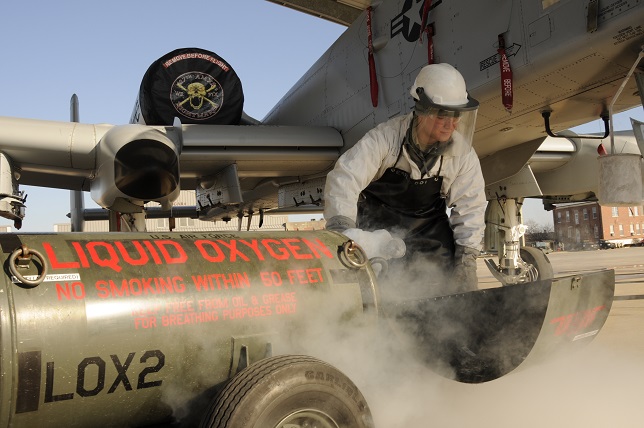

Aircraft oxygen systems are among the most safety-critical subsystems in aviation. From high-altitude military missions to routine training sorties, pilots rely on uninterrupted, contamination-free oxygen to maintain physiological performance. Yet, while much attention is given to onboard systems, ground-based oxygen servicing infrastructure often determines real operational readiness.
As air operations become faster, more dispersed, and increasingly mission-driven, mobile oxygen ground support is emerging as a strategic necessity rather than a logistical convenience.
The Hidden Complexity of Aviation Oxygen Handling
Unlike conventional industrial gases, aviation oxygen demands:
-
Strict purity control
-
Oxygen-clean components and procedures
-
Controlled pressure ramp-up during charging
-
Fire-safe handling in confined environments
Any deviation — moisture ingress, improper boosting, or pressure shock — can compromise safety or shorten component life. This makes oxygen ground support a specialized engineering domain, not a generic gas-handling task.
Why Fixed Oxygen Infrastructure Falls Short
Traditional fixed oxygen filling stations work well in centralized hangars but struggle in real operational conditions:
-
Aircraft parked across dispersed aprons
-
Rapid sortie generation requirements
-
Forward or temporary air bases
-
Limited access to centralized utilities
In such environments, transporting aircraft to oxygen infrastructure becomes inefficient, increasing turnaround time and operational risk.
The Shift Toward Mobile Oxygen Ground Support
Modern air forces and aerospace operators are increasingly adopting vehicle-mounted oxygen support systems that bring the capability directly to the aircraft. This approach offers:
-
Faster aircraft turnaround on the flight line
-
Reduced dependency on fixed facilities
-
Better control over oxygen handling procedures
-
Improved readiness during surge operations
Mobile platforms also enable standardized servicing workflows regardless of location — a key advantage for military and expeditionary operations.
Safety: The Defining Factor in Oxygen Servicing
Oxygen does not burn, but it dramatically accelerates combustion. This makes safety engineering non-negotiable in aviation oxygen systems. Advanced mobile ground support solutions incorporate:
-
Continuous oxygen purity monitoring
-
Redundant pressure regulation stages
-
Fire-suppression mechanisms within operator enclosures
-
Oxygen-compatible materials throughout the system
These safeguards are essential to mitigate risks associated with high-pressure oxygen handling in dynamic airfield environments.
Engineering for Real-World Operations
Aviation ground support equipment must be designed for:
-
Harsh weather conditions
-
Vibration and transport loads
-
Repeated pressurization cycles
-
Human-machine interaction under time pressure
Purpose-engineered mobile oxygen platforms are built with these realities in mind, balancing robustness with precise control — something ad-hoc or improvised setups cannot reliably achieve.
Supporting Mission Readiness Through Better Ground Systems
In modern aviation, mission readiness is not determined only by aircraft capability, but by how efficiently ground systems support those aircraft. Oxygen ground support directly impacts:
-
Pilot safety
-
Sortie generation rate
-
Maintenance efficiency
-
Operational resilience
Investing in advanced, mobile oxygen ground support systems is therefore an investment in mission continuity itself.
Conclusion
As aviation operations evolve, so must the systems that support them on the ground. Mobile oxygen ground support represents a critical shift toward safer, faster, and more adaptable aircraft servicing. By integrating high-pressure handling, safety engineering, and operational mobility, these systems address challenges that fixed infrastructure can no longer solve alone.
To see an example of how this capability is implemented in a defense-grade platform, explore Neometrix Group’s
👉 Oxygen Charging & Distribution Vehicle (UGSSO₂)
🔗 https://neometrixgroup.com/products/oxygen-charging-and-distribution-vehicle-iaf-UGSSO2
Gas Generation & Charging Systems for USA, UK, Europe & the Middle East: Neometrix gas generation and charging systems are exported to industrial facilities, hospitals, and defence establishments across the United States, United Kingdom, Europe, and the GCC. Our systems carry CE, ASME, and ISO certifications required by international buyers. Regional after-sales service and spare parts support is available globally.