
Introduction
In modern manufacturing, hydraulic systems form the backbone of heavy-duty machinery, automotive components, aerospace assemblies, and industrial equipment. Among the critical components that demand rigorous testing is the rear cover sub-assembly, which often houses vital sealing, pressure retention, and structural elements.
To ensure operational reliability and safety, manufacturers rely on specialized hydraulic test systems such as the Hydraulic Test Rig of Rear Cover Sub-Assembly.
🔗 Product Reference:
https://neometrixgroup.com/products/hydraulic-test-rig-of-rear-cover-sub-assembly
Why Rear Cover Sub-Assembly Testing is Critical
Rear cover assemblies typically function under high hydraulic pressure and dynamic loading conditions. A minor flaw in sealing, machining tolerance, or assembly alignment can result in:
-
Internal leakage
-
Pressure drop under load
-
Seal failure
-
Reduced component lifespan
-
Safety hazards in field operations
Hydraulic test rigs simulate real-world operating conditions, validating performance before final deployment.
Core Objectives of a Hydraulic Test Rig
A high-performance hydraulic test rig is designed to evaluate:
✅ Pressure Integrity
Ensuring the rear cover assembly withstands rated and proof pressures without leakage or deformation.
✅ Leak Detection
Identifying micro-leaks using precision pressure decay or flow monitoring systems.
✅ Structural Stability
Monitoring deformation under sustained or cyclic pressure loads.
✅ Performance Validation
Confirming operational parameters such as flow rate, pressure stability, and seal performance.
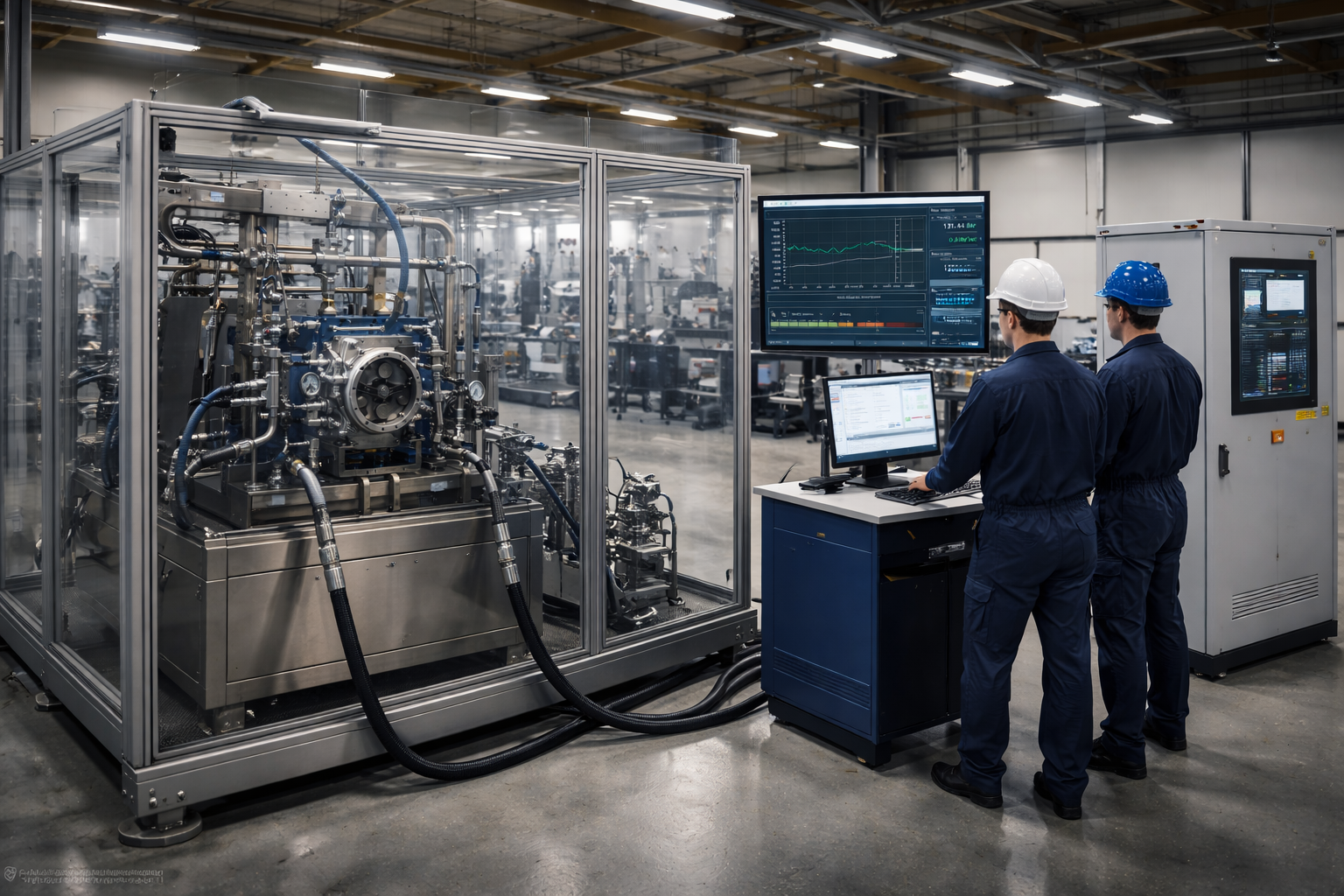
Key Components of an Advanced Hydraulic Test Setup
A robust hydraulic test rig generally includes:
-
High-pressure hydraulic power pack
-
Precision pressure transducers
-
Digital data acquisition system
-
Stainless steel piping and reinforced hoses
-
Servo-controlled pump system
-
Safety enclosure with transparent shielding
-
PLC/Computer-based monitoring interface
These components ensure accurate, repeatable, and safe testing operations.
Benefits of Automated Hydraulic Testing
1️⃣ Improved Quality Control
Automated test cycles eliminate manual errors and ensure standardized testing procedures.
2️⃣ Real-Time Data Logging
Digital systems record pressure curves, leak rates, and test duration for traceability.
3️⃣ Enhanced Safety
Enclosed test chambers protect operators from high-pressure hazards.
4️⃣ Faster Production Validation
Reduced inspection time improves overall manufacturing efficiency.
Industries That Benefit
Hydraulic rear cover sub-assembly testing plays a critical role in:
-
Automotive manufacturing
-
Heavy construction equipment
-
Aerospace hydraulic systems
-
Rail and defense equipment
-
Industrial machinery production
In each of these sectors, reliability under pressure is not optional — it is mandatory.
The Role of Precision Engineering
Modern hydraulic test rigs incorporate microprocessor-based control systems, automated pressure ramping, and customizable test cycles. This allows manufacturers to:
-
Define pressure hold durations
-
Configure ramp-up and ramp-down rates
-
Set acceptable leak thresholds
-
Generate automated test reports
Such capabilities support global quality standards and compliance requirements.
Moving Toward Smart Testing Infrastructure
With Industry 4.0 integration, advanced hydraulic test systems now offer:
-
Remote monitoring
-
Cloud-based data storage
-
Predictive maintenance insights
-
ERP/MES integration
This digital transformation ensures manufacturing units operate with higher transparency, traceability, and reliability.
Conclusion
Hydraulic test rigs for rear cover sub-assembly are more than just testing equipment — they are quality assurance systems that safeguard performance, durability, and safety. By simulating real-world hydraulic stress conditions, manufacturers can confidently deliver products that meet stringent operational demands.
For detailed technical specifications and system configuration, visit:
👉 https://neometrixgroup.com/products/hydraulic-test-rig-of-rear-cover-sub-assembly
Supplying Hydraulic Test Equipment to USA, UK, Europe & the Middle East: Neometrix hydraulic testing systems are deployed by testing facilities and defence contractors across the United States, United Kingdom, European Union, and the Middle East. Our systems comply with ASME, BS EN, PED (EU), and GCC regional standards. Contact our international team for pricing, delivery timelines, and on-site commissioning support.