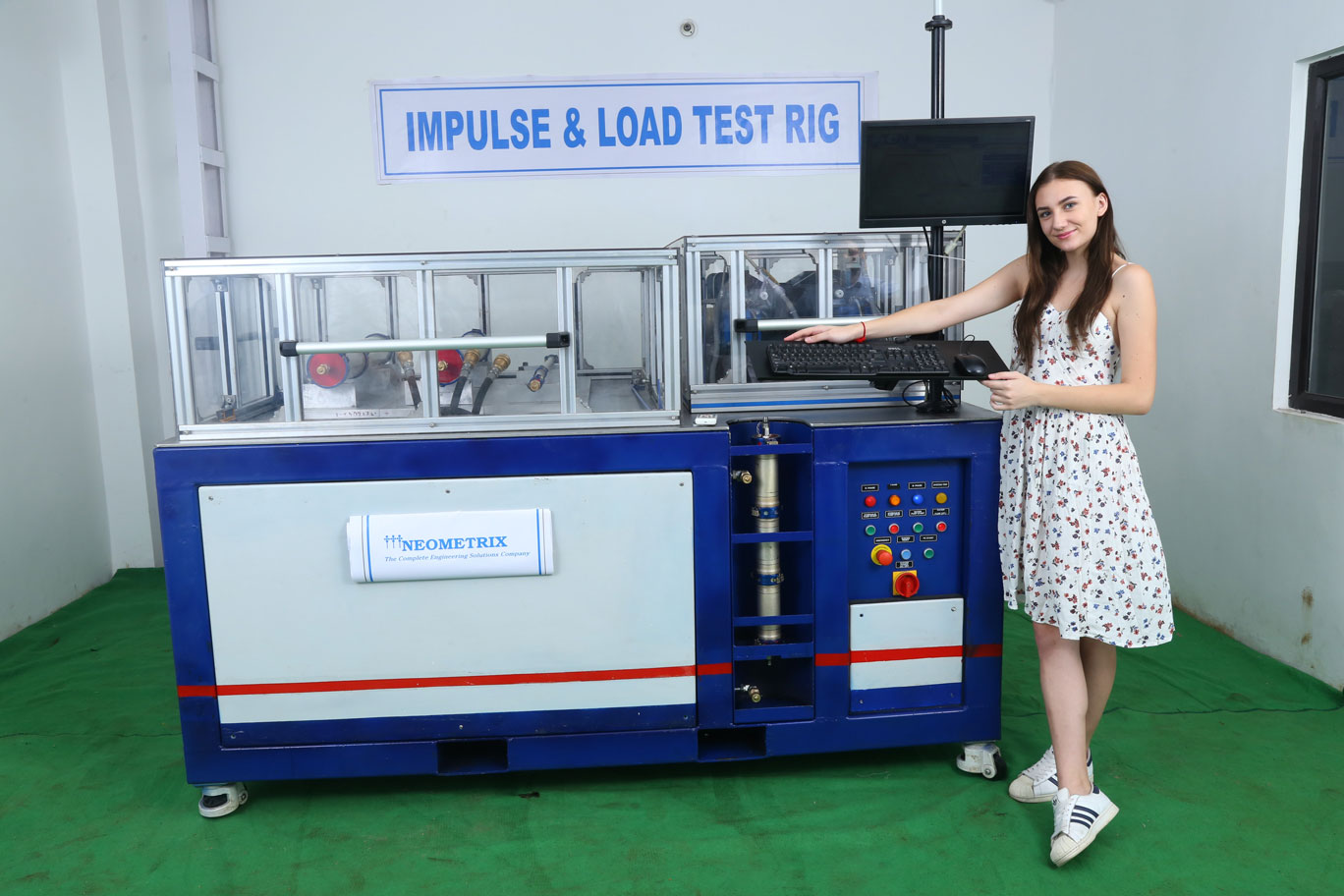
Modern engineering components are rarely subjected to static loads alone. In real operating conditions, hydraulic and mechanical systems experience repeated pressure impulses, fluctuating loads, and long-term fatigue stresses. These conditions can lead to gradual degradation and eventual failure if not properly validated during the design and testing phase.
An Impulse and Load Test Rig is a specialized testing system designed to replicate these real-world stress conditions in a controlled laboratory environment.
What Is Impulse and Load Testing?
Impulse and load testing involves applying:
-
Rapid pressure fluctuations (pressure impulses)
-
Cyclic mechanical loads
-
Long-duration endurance cycles
The objective is to evaluate how a component behaves over time when exposed to dynamic operational stresses, rather than a single static force.
This type of testing is essential for understanding fatigue life, sealing integrity, structural stability, and failure mechanisms.
Why Impulse and Load Testing Is Important
Static strength tests confirm whether a component can withstand a maximum load at a single moment. However, many failures occur due to:
-
Repeated pressure spikes
-
Cyclic loading and unloading
-
Stress concentration over long durations
Impulse and load testing helps identify these issues early, enabling engineers to improve designs, materials, and safety margins before field deployment.
How an Impulse and Load Test Rig Works
An impulse and load test rig is typically based on servo-hydraulic actuation, allowing precise control of pressure and load profiles.
Key functional elements include:
-
Pressure impulse generation through hydraulic circuits
-
Dynamic load application using actuators
-
High-cycle endurance operation
-
Real-time monitoring of pressure, load, and system response
The system can be configured to run tens or hundreds of thousands of cycles, depending on the application and industry standards.
Components Commonly Tested
Impulse and load test rigs are used to test a wide range of components, including:
-
Hydraulic pipes and hose assemblies
-
Valves, manifolds, and fittings
-
Actuators and control components
-
Structural parts exposed to cyclic stress
Testing can be customized based on component size, pressure rating, load direction, and test duration.
Typical Industry Applications
Aerospace and Aviation
Hydraulic systems in aircraft are subjected to frequent pressure and load variations. Impulse testing supports fatigue validation and reliability assurance.
Defense
Defense components operate under unpredictable and extreme conditions. Dynamic stress testing ensures readiness and durability.
Railways
Brake systems and hydraulic assemblies experience repetitive load cycles that require endurance verification.
Industrial Research and Development
R&D teams use impulse and load testing to validate new designs, materials, and performance improvements.
Customization and Modern Test Systems
Modern impulse and load test rigs are often application-specific. Test parameters can be tailored for:
-
Pressure range and impulse frequency
-
Load magnitude and direction
-
Cycle count and test duration
-
Automation, data logging, and safety systems
Organizations such as Neometrix Group design and manufacture customized impulse and load test rigs to accurately simulate real operational environments.
🔗 Related system:
https://neometrixgroup.com/products/impulse-and-load-test-rig
Conclusion
Impulse and load testing plays a critical role in validating component reliability under real-world stress conditions. By reproducing dynamic loads and pressure impulses in a controlled environment, engineers gain valuable insight into fatigue behavior, failure mechanisms, and long-term performance.
Such testing forms a key foundation for safer, more reliable engineering systems across high-responsibility industries.
Supplying Hydraulic Test Equipment to USA, UK, Europe & the Middle East: Neometrix hydraulic testing systems are deployed by testing facilities and defence contractors across the United States, United Kingdom, European Union, and the Middle East. Our systems comply with ASME, BS EN, PED (EU), and GCC regional standards. Contact our international team for pricing, delivery timelines, and on-site commissioning support.