
Introduction
Hydraulic system performance and service life depend heavily on fluid cleanliness.
Contaminants such as metal particles, dust, moisture, and degraded oil residues can cause:
-
Premature wear of components
-
Valve malfunction and sticking
-
Seal damage and leakage
-
Unexpected system failures
To eliminate these risks, industries rely on a Hydraulic Flushing Rig during commissioning, maintenance, and overhaul of hydraulic systems.
For high-flow industrial and defence applications, a dedicated
Hydraulic Flushing Rig
https://neometrixgroup.com/products/hydraulic-flushing-rig
is used to achieve the required cleanliness levels safely and consistently.
Why Hydraulic Flushing Is Necessary
Even new hydraulic systems are not clean by default.
Contaminants are commonly introduced during:
-
Pipe fabrication and welding
-
Assembly and installation
-
Transportation and storage
-
Maintenance and component replacement
If these contaminants are not removed before commissioning, they circulate through critical components, leading to long-term damage and unreliable operation.
Hydraulic flushing removes these contaminants before the system is put into service, protecting pumps, valves, actuators, and seals.
What Is a Hydraulic Flushing Rig?
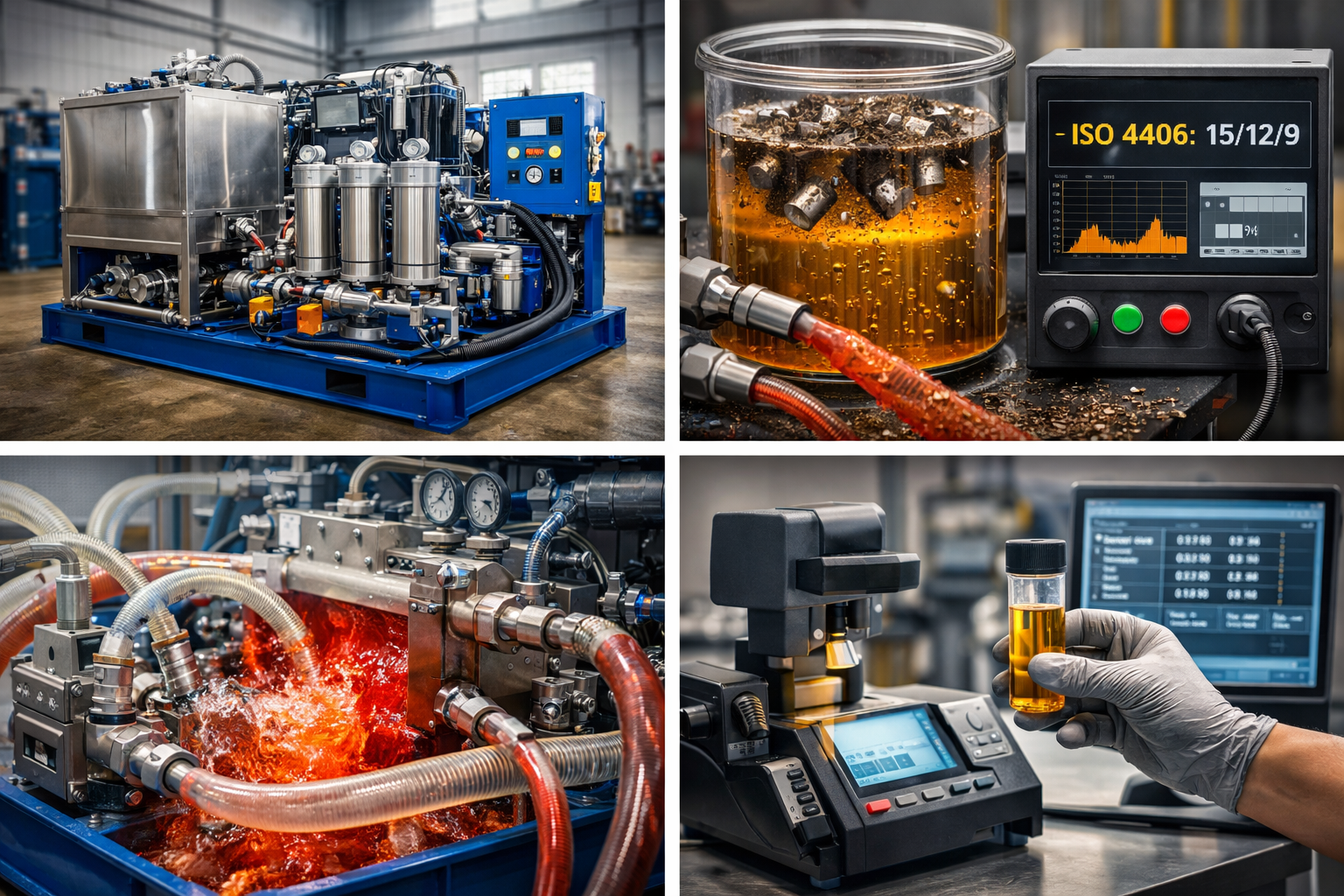
A hydraulic flushing rig is a self-contained, high-flow hydraulic unit designed to circulate flushing oil through a hydraulic circuit under controlled pressure, flow, and temperature conditions.
Unlike standard hydraulic power packs, flushing rigs are engineered specifically to:
-
Generate turbulent flow to dislodge contaminants
-
Continuously filter oil during circulation
-
Prevent removed particles from re-entering the system
This ensures that contamination is removed and captured, not redistributed.
Key Components of a Hydraulic Flushing Rig
A typical industrial hydraulic flushing rig consists of:
-
High-capacity pumps for elevated flow rates
-
Multi-stage filtration units (coarse and fine filters)
-
Oil reservoir with heating and cooling arrangements
-
Pressure and flow control valves
-
Sampling ports for cleanliness verification
-
Pressure, temperature, and flow instrumentation
-
Safety relief and bypass circuits
Each component plays a critical role in achieving safe and effective flushing.
How the Hydraulic Flushing Process Works
The flushing process generally follows these steps:
-
System Connection
The flushing rig is connected to the hydraulic circuit to be cleaned. -
High-Flow Circulation
Flushing oil is circulated at high velocity to create turbulent flow conditions. -
Continuous Filtration
Dislodged contaminants are captured by high-efficiency filters. -
Monitoring and Sampling
Oil samples are periodically checked to verify cleanliness levels. -
Process Completion
Flushing continues until the target cleanliness class is consistently achieved.
Cleanliness requirements are often defined using international standards such as ISO 4406 cleanliness codes, which specify allowable particle levels in hydraulic fluids.
Applications of Hydraulic Flushing Rigs
Hydraulic flushing rigs are widely used in:
-
Defence and aerospace hydraulic systems
-
Power generation plants
-
Steel mills and rolling mills
-
Offshore and marine hydraulics
-
Construction and mining equipment
-
Industrial automation systems
In critical applications, flushing is mandatory before a system is approved for operation.
Advantages of Using a Dedicated Hydraulic Flushing Rig
Using a purpose-built flushing rig offers several long-term benefits:
-
Extended service life of hydraulic components
-
Reduced risk of early system failure
-
Improved operational efficiency
-
Lower maintenance and downtime costs
-
Compliance with cleanliness and safety standards
Proper flushing protects not only equipment but also operational safety.
Custom Hydraulic Flushing Rigs by Neometrix Group
Neometrix Group designs and manufactures custom hydraulic flushing rigs tailored to:
-
Specific flow rate requirements
-
Operating pressure ranges
-
Oil volume and system size
-
Industry and defence standards
Each system is engineered with a strong focus on:
-
Safety and reliability
-
Ease of operation
-
Long-term performance
👉 View product details:
Hydraulic Flushing Rig
https://neometrixgroup.com/products/hydraulic-flushing-rig
Read This Article on Medium
This technical article is also available on Medium for wider engineering discussion:
https://medium.com/@robinyadav8180/why-hydraulic-flushing-is-critical-before-commissioning
Conclusion
Hydraulic system cleanliness is a decisive factor in determining system reliability, performance, and service life.
A well-designed hydraulic flushing rig ensures contaminants are removed before they can cause damage.
For industrial, defence, and high-pressure hydraulic systems, professional hydraulic flushing is not optional — it is essential.
Neometrix Engineering Solutions — USA, UK, Europe & Middle East: Neometrix exports precision test equipment and engineering systems to customers across the United States, United Kingdom, European Union, and the Middle East. Our products comply with ISO 9001, ASME, CE, and MIL quality standards. Contact our international sales team for pricing, delivery, and commissioning support.