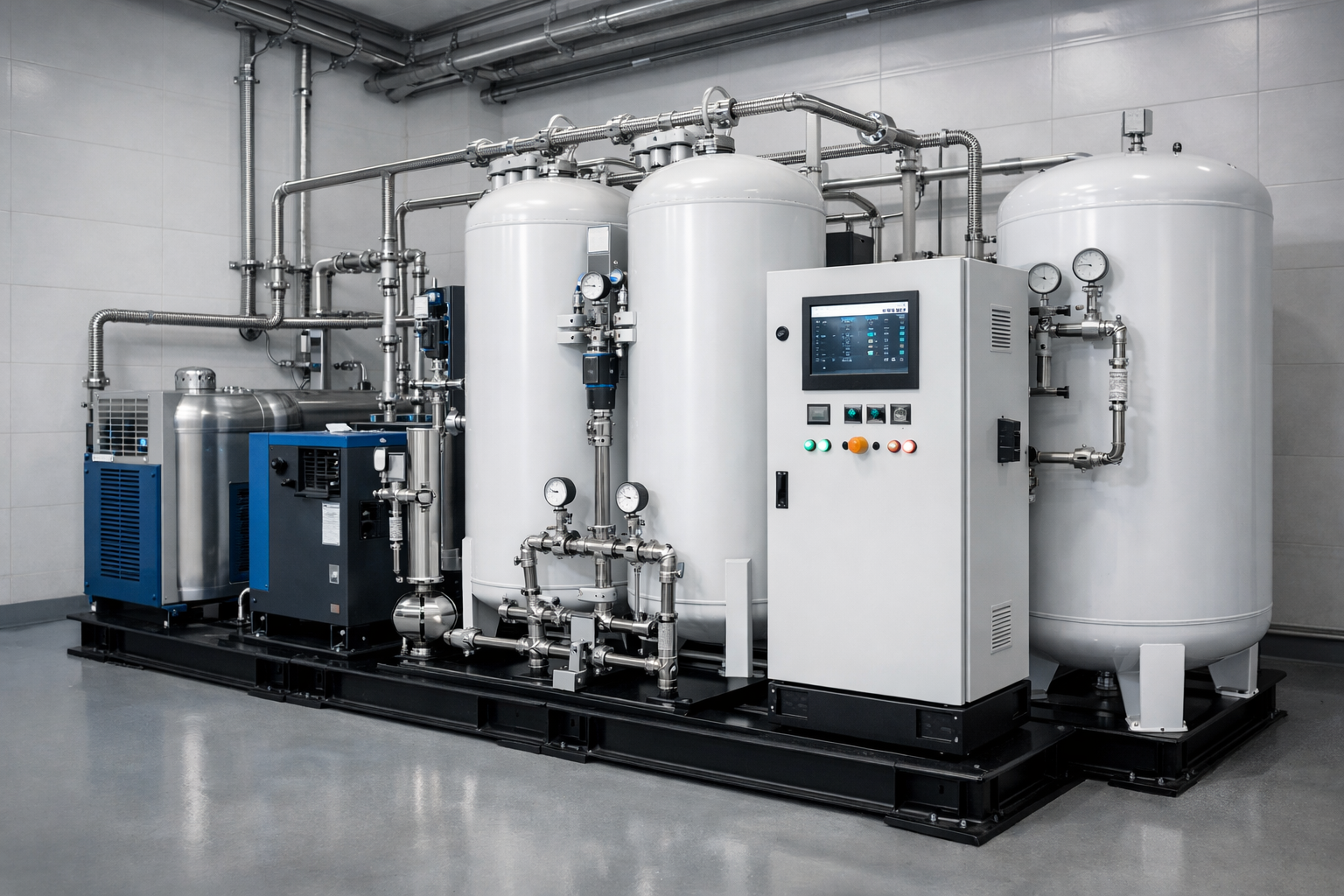
Oxygen is a mission-critical utility for hospitals, laboratories, and many industrial processes. Yet, for decades, most facilities have depended on oxygen cylinders or liquid oxygen (LOX)—systems that are expensive, logistically complex, and vulnerable to supply-chain disruptions.
This dependency became painfully visible during recent global healthcare crises, where oxygen shortages directly affected patient outcomes. As a result, PSA (Pressure Swing Adsorption) oxygen generation plants are now emerging as the preferred long-term solution for reliable, self-sufficient oxygen supply.
The Hidden Costs of Cylinder-Based Oxygen Supply
At first glance, oxygen cylinders appear simple and familiar. In practice, they introduce multiple operational challenges:
-
Continuous dependency on third-party suppliers
-
Rising refill and transportation costs
-
Manual handling risks and storage safety concerns
-
Supply interruptions during emergencies or remote operations
-
Limited scalability as demand grows
For facilities that require oxygen around the clock, these issues translate into higher operating costs and increased risk.
How PSA Oxygen Generation Works
A PSA oxygen generation plant produces oxygen directly from ambient air. Using molecular sieve beds, nitrogen is selectively adsorbed while oxygen passes through and is collected at high purity.
The process is:
-
Ambient air is compressed and filtered
-
Nitrogen is separated using PSA technology
-
Oxygen is delivered continuously to a storage tank or pipeline
-
The system automatically regenerates and cycles for nonstop operation
This fully automated process ensures a steady and predictable oxygen supply, independent of external logistics.
Why a 200 LPM PSA Oxygen Plant Makes Practical Sense
A 200 LPM capacity PSA oxygen generation plant strikes an ideal balance between performance, footprint, and cost. It is particularly suitable for:
-
Small to mid-size hospitals and clinics
-
Nursing homes and healthcare centers
-
Diagnostic labs and research facilities
-
Industrial workshops requiring process oxygen
-
Backup or redundancy oxygen systems
Instead of overinvesting in oversized plants, facilities can deploy a 200 LPM system that meets current needs while remaining scalable for future expansion.
Key Advantages of On-Site PSA Oxygen Generation
Switching to a PSA oxygen plant offers measurable operational benefits:
-
24/7 oxygen availability without refilling delays
-
Lower lifecycle cost compared to cylinders or LOX
-
Improved safety by eliminating high-pressure cylinder handling
-
Compact, skid-mounted design for easy installation
-
Low maintenance with minimal operator intervention
-
Energy-efficient operation optimized for continuous use
Over time, these advantages result in cost savings, higher reliability, and operational independence.
Supporting Healthcare Resilience and Industrial Continuity
For healthcare facilities, uninterrupted oxygen supply is non-negotiable. For industrial users, process downtime caused by oxygen shortages can mean significant financial loss. PSA oxygen generation plants address both concerns by delivering oxygen exactly where and when it is needed.
By producing oxygen on-site, organizations gain:
-
Predictable operating costs
-
Reduced exposure to supply-chain disruptions
-
Greater preparedness for emergencies
-
A more sustainable and self-reliant infrastructure
Moving Toward Oxygen Self-Sufficiency
As regulations tighten and infrastructure planning evolves, on-site oxygen generation is rapidly becoming a standard utility rather than an optional upgrade. PSA technology represents a future-proof investment that aligns with safety, sustainability, and operational efficiency goals.
🔗 Product reference:
https://neometrixgroup.com/products/PSA-oxygen-generation-plant-200LPM
Gas Generation & Charging Systems for USA, UK, Europe & the Middle East: Neometrix gas generation and charging systems are exported to industrial facilities, hospitals, and defence establishments across the United States, United Kingdom, Europe, and the GCC. Our systems carry CE, ASME, and ISO certifications required by international buyers. Regional after-sales service and spare parts support is available globally.