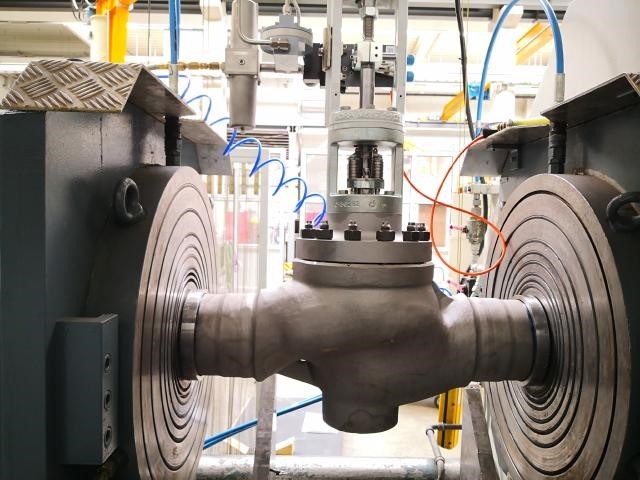
Hydraulic systems are only as reliable as their control valves. These components regulate pressure, flow, and direction—making them the decision-makers of any hydraulic circuit. A minor deviation in valve behavior can cascade into efficiency losses, unstable motion, overheating, or even catastrophic system failure.
This is why systematic testing of hydraulic control valves has become a cornerstone of modern industrial quality assurance.
The Critical Role of Control Valves in Hydraulic Systems
Control valves are exposed to:
-
High pressure differentials
-
Rapid switching cycles
-
Contaminated fluids
-
Thermal fluctuations
Over time, these stresses can affect response time, sealing integrity, and flow characteristics. Without proper validation, even a precision-machined valve can behave unpredictably once installed in a real system.
Testing ensures the valve performs as designed, not just as manufactured.
Why Functional Testing Matters More Than Visual Inspection
Visual checks and dimensional inspection confirm manufacturing quality—but they cannot predict operational behavior. Functional testing evaluates how a valve actually performs under simulated working conditions, including:
-
Pressure holding capability
-
Flow vs. pressure characteristics
-
Leakage across ports
-
Dynamic response to actuation
These parameters directly impact system stability and efficiency, especially in high-duty-cycle applications.
Challenges in Hydraulic Valve Performance Evaluation
Testing hydraulic control valves is not trivial. Engineers face several challenges:
1. Accurate Pressure & Flow Control
Small variations can significantly alter test results, demanding precise regulation and measurement.
2. Repeatability
Industrial QA requires consistent results across batches, shifts, and test cycles.
3. Operator Safety
Testing involves pressurized fluids that can store substantial energy, making controlled test environments essential.
4. Data Traceability
Modern manufacturing increasingly demands documented proof of performance—not just pass/fail decisions.
These challenges have driven the adoption of dedicated hydraulic valve test benches over improvised test setups.
Standardization and Compliance Pressures
Industries such as power generation, mobile hydraulics, process plants, and heavy machinery operate under strict internal and regulatory standards. Consistent valve testing supports:
-
Reduced warranty claims
-
Predictable system behavior
-
Easier fault diagnosis in the field
-
Compliance with customer and regulatory requirements
In many organizations, valve testing is now integrated directly into production and maintenance workflows.
From Maintenance to Predictive Reliability
Beyond manufacturing QA, valve testing plays a role in predictive maintenance. Periodic performance evaluation helps identify:
-
Wear-related leakage trends
-
Sluggish response due to contamination
-
Degradation before functional failure
This approach reduces unplanned downtime and improves lifecycle management of hydraulic assets.
Conclusion
Hydraulic control valves may be compact, but their impact on system performance is enormous. Reliable testing bridges the gap between theoretical design and real-world operation—ensuring systems behave safely, efficiently, and predictably.
As hydraulic applications grow more demanding, investing in structured valve testing is no longer optional—it is fundamental to system reliability.
To explore how structured hydraulic valve testing is implemented in a dedicated solution, see Neometrix Group’s
👉 Hydraulic Control Valve Test Bench
🔗 https://neometrixgroup.com/products/hydraulic-control-valve-test-bench
Supplying Hydraulic Test Equipment to USA, UK, Europe & the Middle East: Neometrix hydraulic testing systems are deployed by testing facilities and defence contractors across the United States, United Kingdom, European Union, and the Middle East. Our systems comply with ASME, BS EN, PED (EU), and GCC regional standards. Contact our international team for pricing, delivery timelines, and on-site commissioning support.