
Gas cylinders — whether used in CNG vehicles, hospital oxygen systems, firefighting equipment, or hydrogen fuel cells — operate under extreme pressure every single day. Over time, that pressure causes structural fatigue. Cylinders that look perfectly fine on the outside can be dangerously weakened on the inside.
Volumetric expansion testing is the only internationally recognised method to measure that internal structural change — before a cylinder fails in the field.
This guide explains exactly how volumetric expansion testing works, which standards mandate it globally, and why automated systems have become the industry standard for testing facilities across the USA, UK, Europe, and the Middle East.
What is Volumetric Expansion Testing?
Volumetric expansion testing — also called hydrostatic expansion testing — is a pressure-based safety test applied to high-pressure gas cylinders to measure how much the cylinder expands under pressure, and critically, how much of that expansion is permanent.
When a cylinder is pressurised, it expands slightly. A healthy cylinder will spring back to its original volume when pressure is released. A weakened or fatigued cylinder will not fully recover — it retains some of that expansion permanently.
That permanent deformation is the key safety indicator.
The test measures two types of expansion:
- Elastic expansion — the portion of expansion that reverses when pressure is released (normal and expected)
- Permanent expansion — the portion that does not reverse (indicates structural weakening)
The ratio between permanent and total expansion determines whether a cylinder is safe to continue using or must be taken out of service permanently.
How Does the Volumetric Expansion Test Work? (Step-by-Step)
The standard method used globally is the water jacket hydrostatic test. Here is how the process works:
Step 1 — Fill the cylinder with water
The gas cylinder is completely filled with water and sealed. Using water instead of gas means that if the cylinder fails during testing, there is no explosive gas release — making the test inherently safe.
Step 2 — Place inside a sealed water jacket
The water-filled cylinder is placed inside a larger sealed vessel also filled with water. The volume of water in this outer jacket is precisely measured.
Step 3 — Pressurise to test pressure
The cylinder is pressurised to 1.5 times its rated working pressure — the internationally mandated test pressure under ISO 6406, DOT CFR-49, EN 1968, and IS 8451. As the cylinder expands under this pressure, it displaces water out of the outer jacket. This displaced water volume is measured precisely.
Step 4 — Release pressure and measure again
After holding test pressure, the pressure is released. The cylinder contracts. Water flows back into the jacket — but if the cylinder has permanently expanded, slightly less water returns than was displaced.
Step 5 — Calculate permanent expansion
The permanent expansion percentage is calculated using this formula:
% Permanent Expansion = [(A − C) ÷ (A − B)] × 100
Where:
- A = Total water displaced at test pressure
- B = Initial water volume in the cylinder
- C = Water returned after pressure release
Step 6 — Pass or fail decision
- 10% or less permanent expansion → Cylinder PASSES. Safe for continued service.
- More than 10% permanent expansion → Cylinder FAILS. Must be permanently decommissioned.
Why 1.5× Working Pressure?
The test pressure of 1.5 times the cylinder’s working pressure is not arbitrary. It is derived from the safety factor mandated by pressure vessel engineering standards worldwide.
This threshold:
- Reveals structural weaknesses that would not appear at normal operating pressure
- Ensures the cylinder can safely withstand pressure surges and overpressure events in real-world use
- Is the minimum required by every major international standard (ISO, DOT, EN, IS)
A cylinder that cannot survive 1.5× its working pressure during a controlled water-based test has no business carrying pressurised gas in the field.
Which Cylinders Require Volumetric Expansion Testing?
Virtually every category of high-pressure gas cylinder requires periodic hydrostatic volumetric expansion testing. These include:
| Cylinder Type | Typical Industries |
|---|---|
| CNG (Compressed Natural Gas) cylinders | Automotive, transport, refuelling stations |
| Oxygen cylinders | Medical, aerospace, defence, industrial |
| Hydrogen cylinders | Green energy, fuel cell vehicles, industrial |
| Nitrogen cylinders | Manufacturing, aerospace, oil & gas |
| CO₂ cylinders | Food & beverage, fire suppression |
| Argon cylinders | Welding, industrial gas |
| SCBA cylinders | Firefighting, rescue, defence |
| Helium cylinders | Research, aerospace, medical |
Both metal cylinders (steel, aluminium) and composite cylinders (carbon fibre wrapped) require testing, though test parameters may vary by material and standard.
International Standards for Volumetric Expansion Testing
Different regions have their own regulatory frameworks, but the underlying test methodology is consistent. Here is a breakdown by target market:
United States 🇺🇸
- DOT CFR-49 (Title 49, Code of Federal Regulations) — mandates hydrostatic requalification of all DOT-approved cylinders
- CGA C-1 (Compressed Gas Association) — standard for periodic inspection of compressed gas cylinders
- NFPA 1981 — testing of SCBA cylinders used by fire services
- Requalification interval: typically every 5 years for most CNG and industrial cylinders
European Union & UK 🇬🇧🇩🇪
- EN 1968 — European standard for periodic inspection and testing of seamless steel gas cylinders
- EN ISO 6406 — periodic inspection of seamless steel compressed gas cylinders
- PED (Pressure Equipment Directive) 2014/68/EU — governs pressure vessel equipment sold in the EU
- CE marking is required for testing equipment sold in EU markets
Middle East 🇦🇪🇸🇦
- ESMA (Emirates Authority for Standardisation and Metrology) — UAE standards for gas cylinder testing
- SASO (Saudi Standards, Metrology and Quality Organisation) — Saudi Arabia’s gas cylinder regulations
- GCC Standardisation Organisation (GSO) standards apply across the Gulf Cooperation Council region
India 🇮🇳
- IS 8451 — Indian Standard for gas cylinder testing
- GOI Gas Cylinder Rules — Government of India mandated testing requirements
- CGD (City Gas Distribution) compliance for CNG stations
Manual Testing vs Automatic Volumetric Expansion Testing — Key Differences
For decades, volumetric expansion testing was done manually — operators physically measuring water displacement with graduated tubes and stopwatches. That method is increasingly inadequate for modern testing facilities.
| Factor | Manual Testing | Automatic AVET System |
|---|---|---|
| Measurement accuracy | ±2–5% human error | ±0.1% automated precision |
| Data recording | Paper logbooks | Automated digital reports |
| Test cycle time | 20–40 minutes per cylinder | 8–15 minutes per cylinder |
| Operator dependency | High | Minimal |
| Audit trail | Manual, prone to gaps | Complete digital records |
| Compliance documentation | Manual | Auto-generated certificates |
| Consistency | Variable between operators | Consistent every cycle |
For testing facilities processing tens or hundreds of cylinders daily — such as CNG refuelling stations, industrial gas suppliers, or military requalification centres — the productivity and accuracy difference is decisive.
What is an Automatic Volumetric Expansion Test System (AVET)?
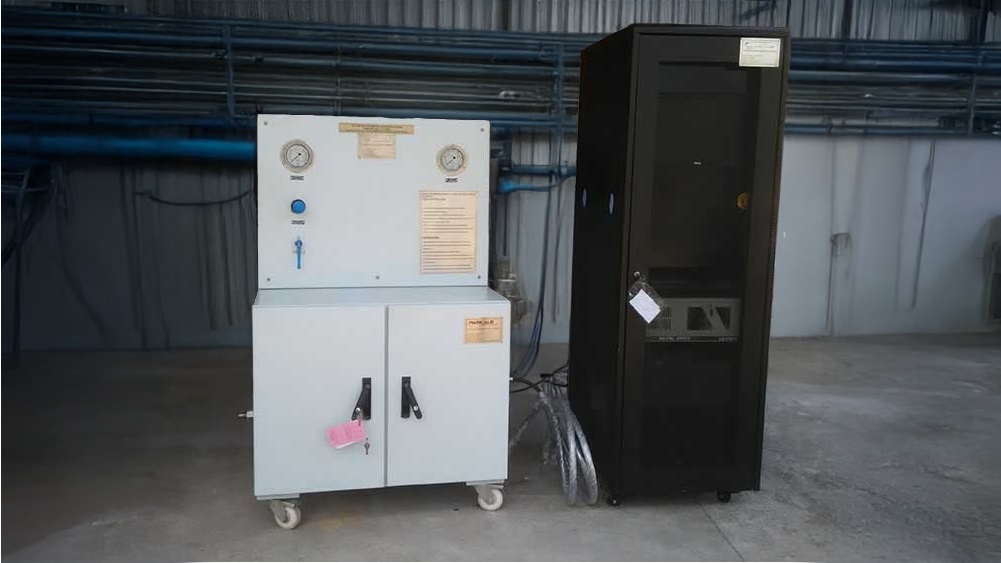
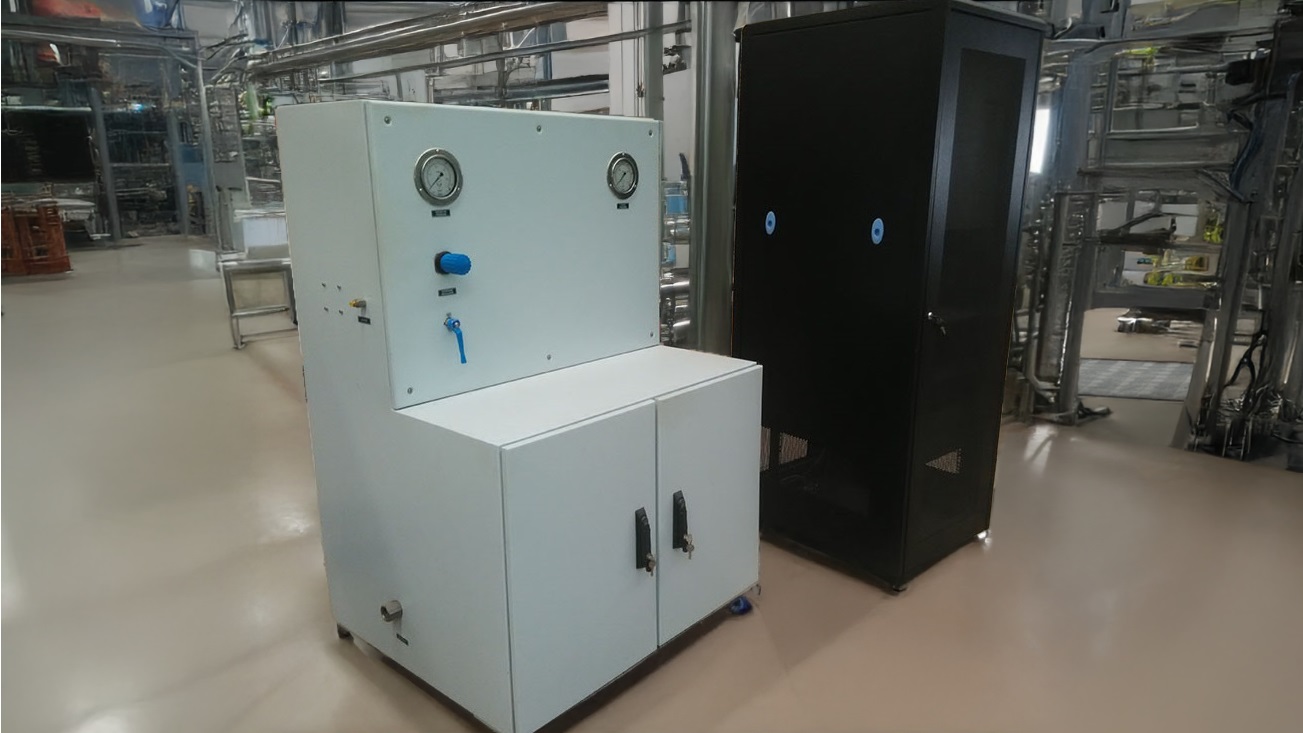
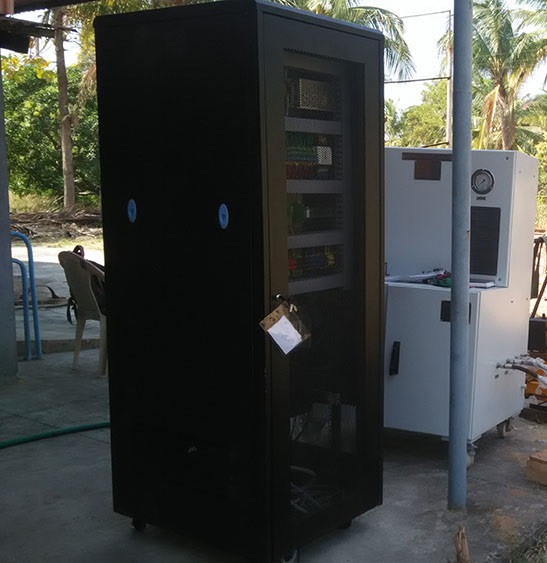
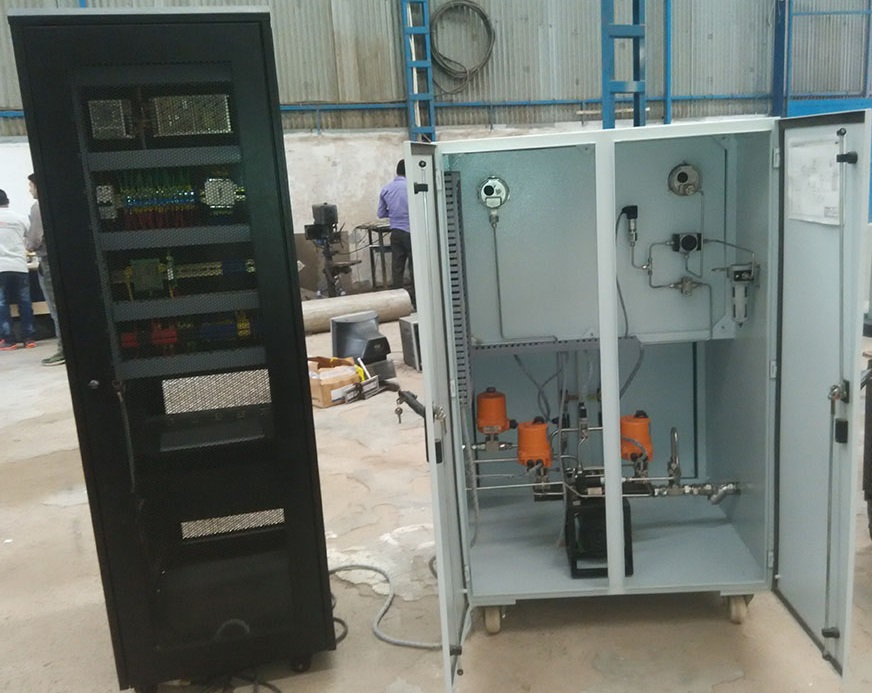
An Automatic Volumetric Expansion Test System (AVET) is a fully integrated, computer-controlled testing station that automates the entire hydrostatic expansion test cycle — from cylinder filling and pressurisation through measurement, data logging, and pass/fail determination.
Key components of a modern AVET system:
- High-precision pressure control system — delivers and holds exact test pressure
- Self-lubricating hydraulic pump — no external airline lubrication required
- Automated data acquisition unit — captures all expansion measurements in real time
- Touchscreen control panel — operator interface for test setup and monitoring
- Stainless steel frame and water jacket — corrosion-resistant, compact footprint
- Automated report generation — produces compliance documentation per ISO/DOT/EN formats
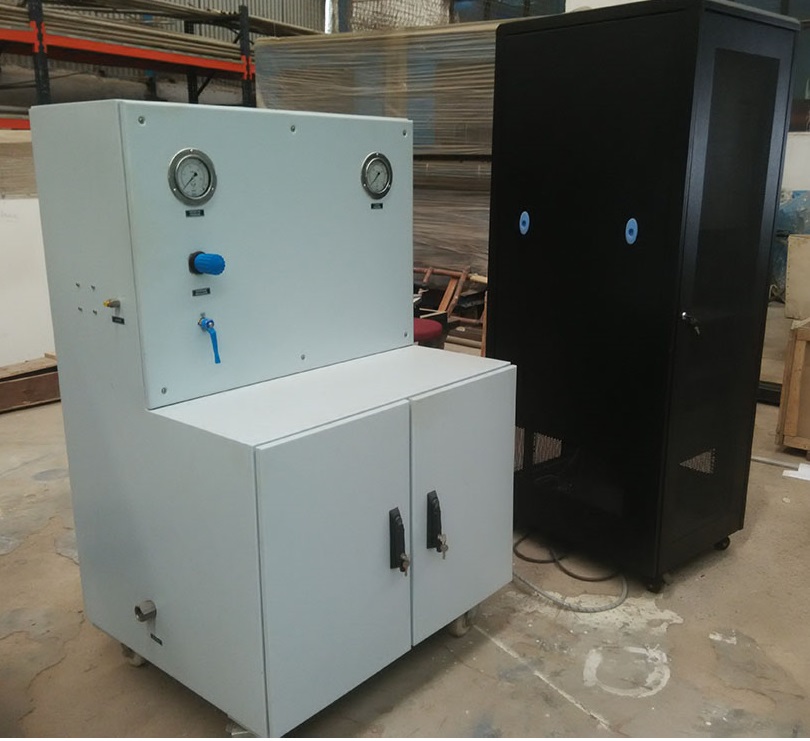
The system applies no heat, flame, or spark at any stage — making it intrinsically safe for testing flammable gas cylinders including CNG and hydrogen.
Industries and Applications That Require AVET Systems
Gas Cylinder Testing & Requalification Facilities
Testing stations that requalify cylinders before refilling must demonstrate regulatory compliance. An automated system provides the audit trails and documentation that manual methods cannot reliably produce.
CNG Vehicle and Infrastructure Industry
CNG fuel cylinders in vehicles must be periodically tested per DOT, ESMA, or equivalent standards. Fleet operators and CNG station owners depend on fast, accurate testing to maintain operations without extended downtime.
Hydrogen and Green Energy Sector
The global hydrogen economy is expanding rapidly. Type III and Type IV composite hydrogen cylinders used in fuel cell vehicles require rigorous testing per ISO 15869 and related standards. Automated systems handle composite cylinders without the measurement variability of manual methods.
Medical and Healthcare Facilities
Hospital oxygen cylinders are life-critical equipment. Any cylinder failure in a clinical setting can be catastrophic. Volumetric expansion testing ensures every cylinder in service meets the highest structural integrity standards.
Aerospace and Defence
Oxygen, nitrogen, and breathing air cylinders used in military aircraft, spacecraft, and pilot life support systems are subject to the most stringent testing requirements of any sector. Automated systems provide the precision and documentation demanded by defence procurement.
Firefighting and Emergency Services
SCBA (Self-Contained Breathing Apparatus) cylinders carried by firefighters are tested to NFPA 1981 and EN 137 standards. These cylinders must never fail in a life-threatening environment.
How to Choose a Volumetric Expansion Test System for Your Facility
When evaluating AVET systems for purchase, consider these factors:
1. Pressure range — Does it cover your full range of cylinder working pressures (typically 200–450 bar for industrial cylinders)?
2. Cylinder compatibility — Can it handle both metal and composite cylinders across the diameter and length range you test?
3. Standards compliance — Is the system certified or documented for the standards applicable in your market (DOT, EN 1968, ISO 6406, IS 8451)?
4. Data and reporting — Does it produce reports in formats accepted by your regulatory authority?
5. Throughput — How many cylinders per shift does your facility need to process?
6. Customisation — Can the system be configured for multi-cylinder simultaneous testing if volume demands it?
7. After-sales support — Is local or regional service support available in your country?
Neometrix Automatic Volumetric Expansion Test System
The Neometrix AVET System is a high-precision hydrostatic testing solution designed and manufactured in India, fully compliant with ISO 6406, EN 1968, DOT CFR-49, ASME Section VIII, and IS 8451.
Designed for:
- CNG, Oxygen, Hydrogen, Nitrogen, CO₂, Argon, SCBA, and Helium cylinders
- Both metal and composite cylinder types
- Testing facilities from single-station setups to high-volume multi-cylinder configurations
Key design features:
- Automated data acquisition with zero manual measurement errors
- Self-lubricating pump — no external air lubrication needed
- No heat, flame, or spark generation — safe for flammable gas cylinder testing
- Stainless steel frame — corrosion resistant, suitable for industrial environments
- Infinitely variable cycling speed — adaptable to different cylinder sizes
- Touchscreen PLC control with automated compliance report generation
Neometrix has delivered testing systems to defence organisations, aerospace facilities, industrial gas suppliers, and CNG infrastructure operators across India and internationally.
→ View Full Product Specifications
→ Request a Quote
→ Download Product Catalog
Frequently Asked Questions
Q: What is volumetric expansion testing?
A: Volumetric expansion testing is a hydrostatic safety test for high-pressure gas cylinders. The cylinder is filled with water, pressurised to 1.5 times its working pressure, and the permanent vs elastic expansion is measured. Cylinders with more than 10% permanent expansion must be decommissioned.
Q: What is the pass/fail criteria for hydrostatic volumetric expansion testing?
A: A cylinder passes if permanent expansion is 10% or less of total expansion. If permanent expansion exceeds 10%, the cylinder fails and must be permanently taken out of service — it cannot be refilled or repaired.
Q: What test pressure is used in volumetric expansion testing?
A: The standard test pressure is 1.5 times the cylinder’s rated working pressure. This is mandated by ISO 6406, DOT CFR-49, EN 1968, and IS 8451.
Q: How often do gas cylinders need to be tested?
A: Testing frequency depends on the cylinder type and applicable standard. Under DOT CFR-49 (USA), most cylinders require requalification every 5 years. EN 1968 (Europe) also specifies 5-year intervals for most seamless steel cylinders. IS 8451 (India) specifies similar intervals. CNG vehicle cylinders typically require testing every 3–5 years depending on jurisdiction.
Q: What is the difference between elastic and permanent expansion?
A: Elastic expansion is the increase in cylinder volume under pressure that fully reverses when pressure is released — this is normal. Permanent expansion is the volume increase that does not reverse, indicating the cylinder walls have been permanently deformed. Permanent expansion is the key safety indicator.
Q: Which standards apply to gas cylinder testing in the USA?
A: In the USA, the primary standard is DOT CFR-49 (Title 49, Code of Federal Regulations). CGA C-1 (Compressed Gas Association) provides supplementary guidance. SCBA cylinders used in firefighting must also meet NFPA 1981.
Q: Which standards apply in Europe?
A: EN 1968 and EN ISO 6406 are the primary European standards for periodic inspection and testing of compressed gas cylinders. Equipment sold in the EU must comply with the Pressure Equipment Directive (PED) 2014/68/EU and typically requires CE marking.
Q: Can the Neometrix AVET system test composite (carbon fibre) cylinders?
A: Yes. The Neometrix AVET system is designed to test both metal cylinders (steel and aluminium) and composite cylinders (carbon fibre wrapped), which are increasingly used in CNG vehicles, hydrogen fuel cell applications, and SCBA equipment.
Q: What is an Automatic Volumetric Expansion Test System (AVET)?
A: An AVET is a fully automated hydrostatic test station that performs the complete volumetric expansion test cycle — pressurisation, measurement, data logging, and compliance report generation — without manual measurement. It eliminates human error, improves throughput, and produces digital audit trails for regulatory compliance.
Q: What industries require volumetric expansion testing?
A: Industries that require gas cylinder volumetric expansion testing include automotive and CNG transport, industrial gas manufacturing and distribution, medical oxygen supply, aerospace and defence, firefighting and emergency services, hydrogen and green energy, and oil and gas.
Q: Is water jacket hydrostatic testing safe for hydrogen and CNG cylinders?
A: Yes. The water jacket method is specifically designed for safe testing of cylinders that carry flammable gases. Because the cylinder is filled with water (not gas) during testing, there is no risk of explosion or fire. The Neometrix AVET system generates no heat, flame, or spark at any stage of the process.
Q: What documentation does the AVET system produce for compliance?
A: The Neometrix AVET system generates automated test reports including cylinder identification, test pressure applied, total expansion measured, permanent expansion measured, percentage permanent expansion, pass/fail result, and test date — in formats suitable for ISO, DOT, and EN compliance documentation.
Neometrix Defence Limited is a Noida-based engineering solutions company with 20+ years of experience designing and manufacturing custom test equipment for defence, aerospace, gas, and industrial sectors. All Neometrix systems are Made in India, DRDO-compliant, and ISO certified.
For international enquiries regarding the AVET system, contact: [email protected] | +91-7777-876-876
Gas Cylinder Testing Equipment for USA, UK, Europe & the Middle East: Neometrix AVET systems are deployed at certified testing stations in the United States (DOT CFR-49), United Kingdom (HSE), European Union (EN 1968, PED), and Middle East (ESMA/SASO). We supply to testing facilities across UAE, Saudi Arabia, Germany, France, and the USA. Global commissioning and after-sales support is available.