
Measuring fuel consumption accurately is one of the most commercially and technically consequential tests an engine or locomotive manufacturer can perform. A 1% error in fuel consumption measurement can mean millions in incorrect warranty claims, failed emissions certification, or locomotive procurement decisions made on faulty data.
Automated PLC/HMI-based fuel consumption measurement systems eliminate the human error, thermal drift, and documentation gaps that plague manual measurement — delivering traceable, repeatable results that satisfy SAE, ISO, and EN certification requirements.
Why Fuel Consumption Measurement Matters
Fuel consumption data drives decisions across the entire lifecycle of any engine-powered system:
Procurement: Transport authorities in the USA, UK, Europe, and Middle East use fuel consumption specifications to compare locomotive bids. Test data that cannot withstand scrutiny loses contracts.
Emissions compliance: Fuel consumption links directly to CO2 and NOx emissions. EU Stage V, US EPA Tier 4, and IMO MARPOL regulations require certified fuel consumption data as the basis for emissions type approval.
Fleet maintenance: Operators track actual vs rated consumption to detect engine degradation, injector wear, and maintenance triggers before catastrophic failures occur.
R&D: Engine developers need high-resolution consumption data across full load curves to optimise combustion, injection timing, and thermal efficiency.
How Automated Fuel Consumption Measurement Works
Modern systems use gravimetric (mass-based) measurement rather than volumetric flow measurement. This is more accurate because:
- Fuel density varies with temperature — mass measurement eliminates this variable
- Load cells measure mass directly without flow meter drift
- Results convert directly to energy consumption (MJ/km, g/kWh, BTU/bhp-hr) for regulatory reporting
Step 1 — Gravimetric measurement: The fuel supply tank sits on precision load cells. Fuel consumed = initial mass minus final mass over the test duration.
Step 2 — RTD temperature monitoring: RTDs track fuel temperature continuously. Compensation converts measured consumption to standard reference conditions (15°C per SAE and ISO standards).
Step 3 — PLC control: The PLC manages sampling intervals, applies compensation calculations, and computes instantaneous and cumulative consumption.
Step 4 — HMI and reporting: The HMI displays real-time data. At test end, automated reports are generated in SAE, ISO, and EN-compatible formats.
Applicable International Standards
| Standard | Region | Application |
|---|---|---|
| SAE J1321 | USA | Trucks, buses, commercial vehicles |
| ISO 3046-1 | International | Reciprocating internal combustion engines |
| ISO 8178 | International | Non-road engine exhaust emission |
| EN 15500 | Europe | Railway fuel consumption |
| UIC 623 | Europe/International | Diesel locomotive measurement |
| EPA CFR 40 Part 92 | USA | Locomotive emissions (fuel consumption linked) |
| IMO MARPOL Annex VI | International | Marine diesel engines |
Key Industries
Railway/Locomotive: Locomotive manufacturers and operators across the USA (FRA), UK (Network Rail), Germany (DB), France (SNCF), and Gulf railway projects (Etihad Rail UAE, Saudi Railway) require certified fuel consumption verification.
Industrial Diesel Engines: Engine manufacturers generate certified performance maps for type approval and customer documentation.
Defence Vehicles: NATO STANAG standards for vehicle fuel consumption link directly to operational range — critical for military procurement.
Marine Propulsion: IMO MARPOL testing at marine engine facilities worldwide.
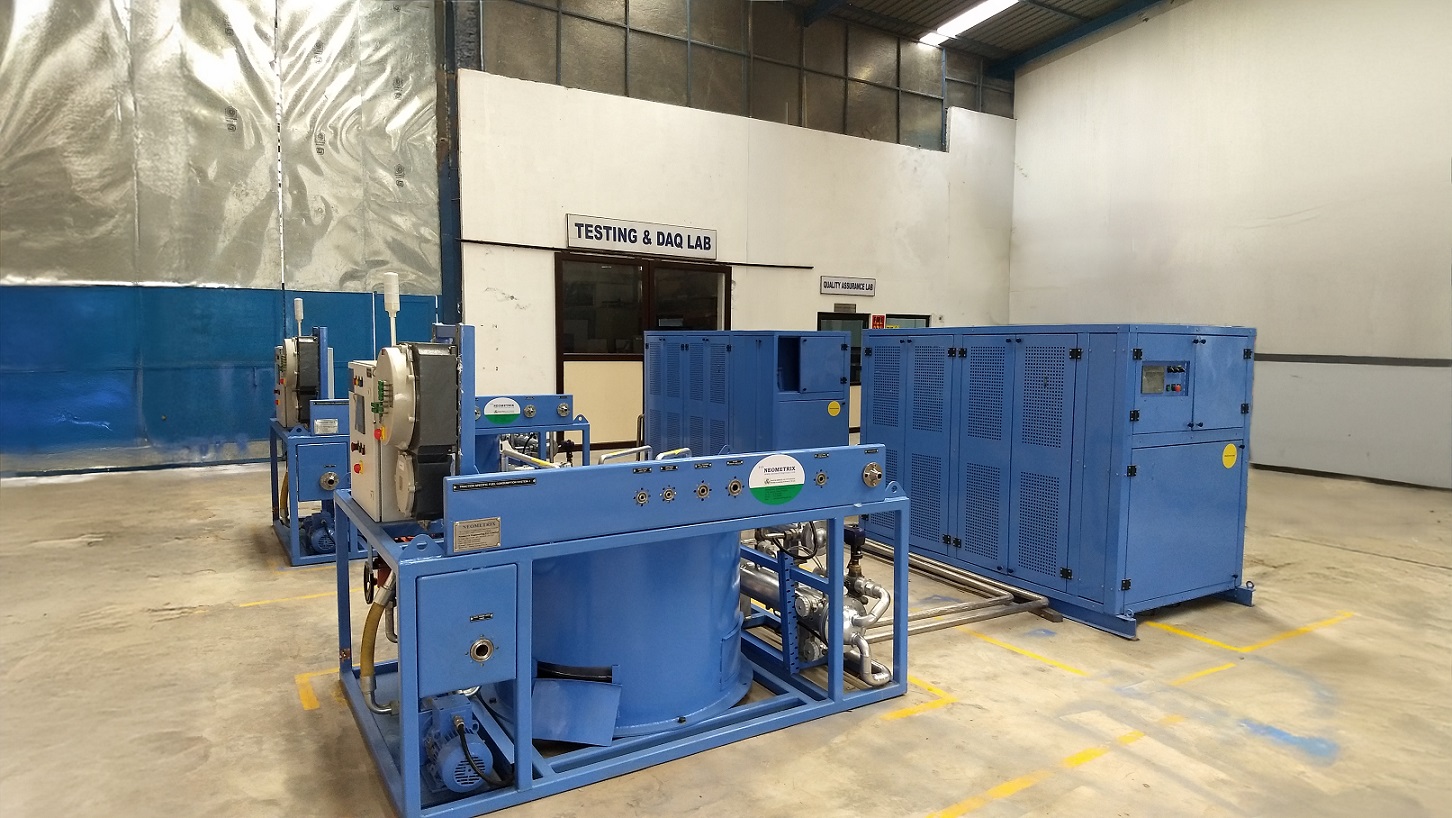
Neometrix Fuel Consumption Measurement System
- 150-litre stainless steel fuel tank on precision load cells
- RTD temperature sensors with automatic compensation
- PLC control with touchscreen HMI
- Automated report generation in SAE/ISO/EN formats
- Suitable for diesel, HSD, and aviation fuel
→ View Specifications
→ Request a Quote
FAQ
Q: What is the most accurate fuel consumption measurement method?
A: Gravimetric (mass-based) measurement via precision load cells is the most accurate. It eliminates fuel density variation errors from temperature changes. SAE J1321 and ISO 3046 specify gravimetric methods as the reference approach.
Q: Why is temperature compensation needed?
A: Fuel density varies with temperature — diesel at 30°C is less dense than at 15°C. Without RTD-based temperature compensation, summer and winter results are not directly comparable. Compensation normalises results to standard reference conditions.
Q: What standard applies to locomotive fuel consumption testing in Europe?
A: EN 15500 covers railway application fuel consumption. UIC 623 applies internationally for diesel locomotives. ISO 3046 and ISO 8178 govern engine performance and emission measurement which are directly linked.
Q: What is SAE J1321?
A: SAE J1321 is the Society of Automotive Engineers standard specifying the test method, equipment requirements, and reporting format for fuel consumption measurement of trucks and commercial vehicles. It is the primary US reference and is widely used internationally.
Neometrix Defence Ltd. — PLC/HMI fuel consumption measurement systems for locomotive, engine, and vehicle testing. [email protected]